

End of penny production creates challenges for local governments

By KATE COIL
TT&C Assistant Editor
With penny production halted and circulation shortages reported by banks and retailers, cities across Tennessee are also looking for guidance on how to handle currency issues.
Perhaps nowhere is the end of penny production felt more than in the towns of Greeneville and Tusculum. Artzan Zinc has been a major employer in both communities for 55 years, and one of the company’s primary products is coin blanks, notably all penny blanks manufactured in the U.S.

Jeff Taylor, president and CEO of the Greene County Partnership, has been working alongside officials in Greeneville and Tusculum as well as leaders in Greene County and other area municipalities to support the continued manufacturing of the penny. Taylor said area officials have been advocating for the continued use of the penny since the first efforts to discontinue it began in the 1990s. However, the sudden announcement from President Donald Trump on Super Bowl Sunday 2025 that penny production would end took them by surprise.
“Obviously, we were saddened and shocked that President Trump decided to cancel the penny. We had hoped the penny would never go away,” Taylor said. “It was very sudden, and we are still dealing with the aftermath. Artzan prints more than just the penny, but the penny was the largest driver of that organization.”
In the past, municipal and Greene County leaders have worked against eliminating the penny production – along with Americans for Common Cents – because of the risk to an estimated 300 local jobs. Artzan Zinc remains one of the major producers of coin blanks internationally and the company has “300 billion coins circulating in more than 20 countries.”
Local leaders have been working with Artzan officials as well as Gov. Bill Lee, Sen. Marsha Blackburn, and Sen. Bill Hagerty to mitigate the economic damage, particularly through the minting of a new nickel at the site.
“If you get rid of the penny, it creates a higher demand on the nickel,” Taylor said. “They have a nickel blank prototype they are trying to get approved through Congress and the U.S. Treasury. They can actually produce the nickel blank for 3.5 cents as opposed to the current 14 cents, which is a $70 to $100 million savings. There is a huge effort to get this new blank approved. If that does not happen, we will have a definite impact. Fortunately, there has been minimal impact to our job situation so far, but Artzan cannot keep doing what they are doing without getting that nickel blank approved.”
Taylor said one of the things holding up the new nickel blank is concern over a lack of guidance.
"When you are dealing with fiscal and monetary policy, you need some guidance so it’s not just left up to the whims of businesses but is fair and equitable for all citizens,” Taylor said. “
Taylor said many in the area are feeling frustration over the entire situation.
“You’ve got a company that has been here over 50 years and has been a staple of our economy and a great community partner,” he said. “No one wants to see anyone lose a job, especially the great-paying jobs they have out there. Just across our county line, J-Tech just lost over 100 jobs to tariffs. What people don’t realize is that it’s greater than the lost job at one company. That impacts the security people, the cleaning staff, and the money those people spend in the community. This is coinage that supports the entire U.S.”
HOW WE GOT HERE
Officially known as the “cent” by the U.S. Mint and the “one cent piece” by the U.S. Treasury, penny production in the U.S. began in 1787 – before the creation of the U.S. Mint in 1792. Since its beginning, the penny has always been a copper or copper-plated coined. It has featured the profile of President Abraham Lincoln since 1909, which was issued to honor the sesquicentennial of the president’s birth.
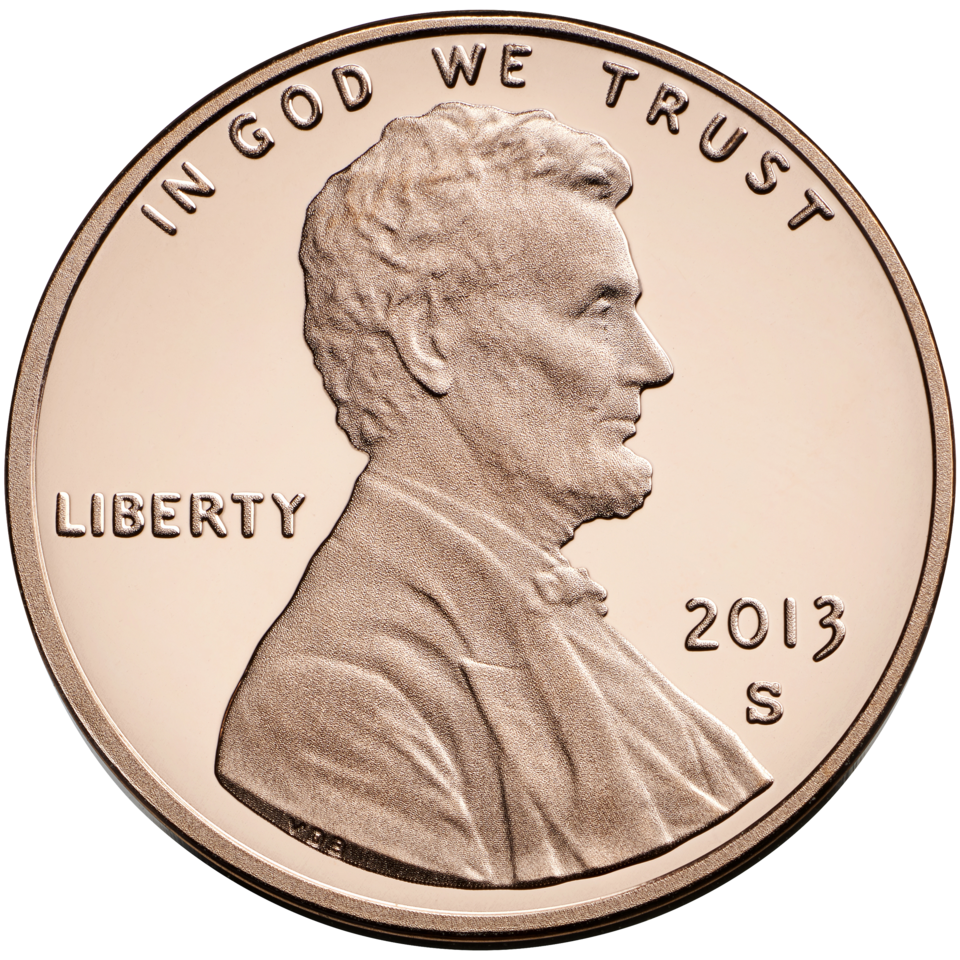
Debate over eliminating the coin began in 1990 due to concerns that the cost of penny production was overtaking the value of the coin. Arguments for penny production conclude that the Mint spends money to make coins whether or not the penny is in production, and that eliminating pennies increases the needs for nickels.
On Feb. 9, 2025, President Donald Trump announced he had ordered Treasury Secretary Scott Bessent to stop manufacture of new pennies to reduce government spending. While authority ultimately resides with the U.S. Congress in what coins to mint, the treasury secretary has authority to mint coins in amounts they deem necessary.
“The Federal Reserve will continue to recirculate the roughly 114 billion pennies currently in existence for as long as possible,” reads a statement on the U.S. Treasury website. “How long existing pennies remain in circulation depends largely on consumer behavior. The Treasury Department encourages the public to spend their on-hand pennies to support a smooth transition and allow retailers and point-of-sale system providers time to adapt. This initiative aims to help keep the existing supply in circulation, ensuring clarity and fairness at the point of sale during the transition.”
Penny shortages have been reported by retailers in recent months, and a bill currently pending in Congress, known as the Common Cents Act, aims to require cash transactions to be rounded to the nearest nickel. In nine states,(opens in a new tab) law actually prohibits rounding up, so retailers have been rounding down. The U.S. Treasury has not issued guidance for retailers or banks regarding the penny shortages and circulation.
Instead, clarification for rounding has largely been left up to state legislatures, according to a report(opens in a new tab) from the National Conference of State Legislatures. In Tennessee, Rep. Charlie Baum, R-Murfreesboro, introduced House Bill 1744(opens in a new tab) - and its companion Senate Bill 1810 - to set how different transactions are rounded.
The U.S. is not the first country to eliminate the use of cent coins, but countries including Australia, Canada, New Zealand, and several EU nations phased their coins out over a period of years.
GUIDANCE FOR GOVERNMENTS
Tennessee Comptroller of the Treasury Jason Mumpower issued guidance(opens in a new tab) for municipalities – including utility systems – to adjust their payment processing practices in a way that is “fair, transparent, and legally sound.”
“This guidance is intended to help local governments navigate a practical challenge while maintaining fairness, transparency, and compliance with the law,” said Comptroller Jason Mumpower. “Each community is different, and local leaders should adopt policies that make sense for their residents while staying within their legal authority.”
The office advises municipalities consider implementing payment procedures for all customer transactions. Options for this include:
- Requiring or encouraging customers to provide exact change when making cash payments;
- Offering alternative payment methods including debit cards, credit cards, electronic checks, or online payment portals;
- Establishing protocols for crediting a customer’s account when a customer is paying non-exact cash for recurring payments;
- Declining to accept non-exact cash payments, when authorized; and
- Adjusting rates, fees, and charges within the local government’s legal authority to multiples of $0.05 or $0.10.
The Comptroller’s Office also urges local officials to carefully evaluate any changes before implementation. This includes:
- Consulting with your attorney to ensure you are acting within your legal authority;
- Ensuring any new policies and procedures are reasonable as applied to your local community;
- Refraining from adopting policies and procedures that provide a benefit to one type of payment over another;
- Applying new policies and procedures uniformly;
- Clearly communicating any new policies and procedures to the local community through appropriate channels;
- Training all staff as necessary; and
- Ensuring all policies and procedures comply with government accounting standards and that accounting systems can appropriately address the new policies and procedures.
For further guidance, municipal officials can contact their regional government(opens in a new tab) finance analyst.
Additional guidance(opens in a new tab) has also been issued by the Tennessee Department of Revenue on how retailers should calculate sales tax when a transaction from a cash-paying customer is affected by a shortage of pennies as sales and use tax requires calculation to the exact cent.