

TACIR: Tennessee needs $82.7B to maintain public infrastructure
By KATE COIL
TT&C Assistant Editor
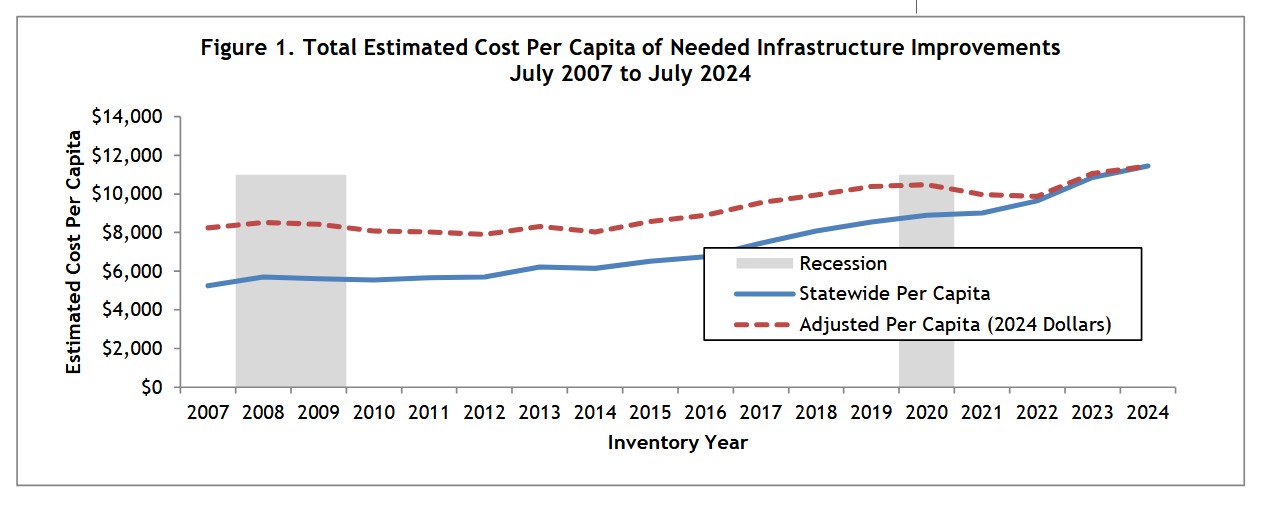
Tennessee needs at least $82.7 billion to maintain public infrastructure – a $5 billion increase over the previous year – according to an annual report issued by the Tennessee Advisory Commission on Intergovernmental Relations (TACIR).
The TACIR report(opens in a new tab) details how much the state requires to fund public infrastructure for the five-year period between July 2024 and June 2029 with expenditures growing 6.5% - approximately $5 billion – since the previous year’s report.
Additionally, the report found that funds are not available for approximately 65% of the necessary public infrastructure projects identified. Approximately $20.9 billion in funding has been secured for projects in the report. TACIR noted that as projects evolve “funding sources are identified and pursued,” but also pointed out “most of the infrastructure needs reported in the July 2019 inventory that were not already fully funded were still needed 5 years later.”
The report also stated that “the government who owns the infrastructure typically funds the bulk of its cost.”
“Even so, cities and counties fund most of their infrastructure improvements with their own property and sales tax revenues, while utility districts fund their improvements primarily with dedicated revenue sources in the form of user fees,” the report indicated. “Because most of the state’s infrastructure needs are not included in this funding analysis, local government sources—mainly counties and cities— provide most of the capital for all the fully-funded needs presented here.”
TRANSPORTATION AND UTILITIES
Transportation and utilities infrastructure needs accounted for 74% in the overall increase in infrastructure expenditures. TACIR found that $42.8 billion was needed for transportation and utilities, with $42.01 billion for transportation, $731.2 million for utilities, and $27.5 million for broadband. Transportation needs increased in cost by 9.3%, or approximately $3.6 billion, since last year’s report.
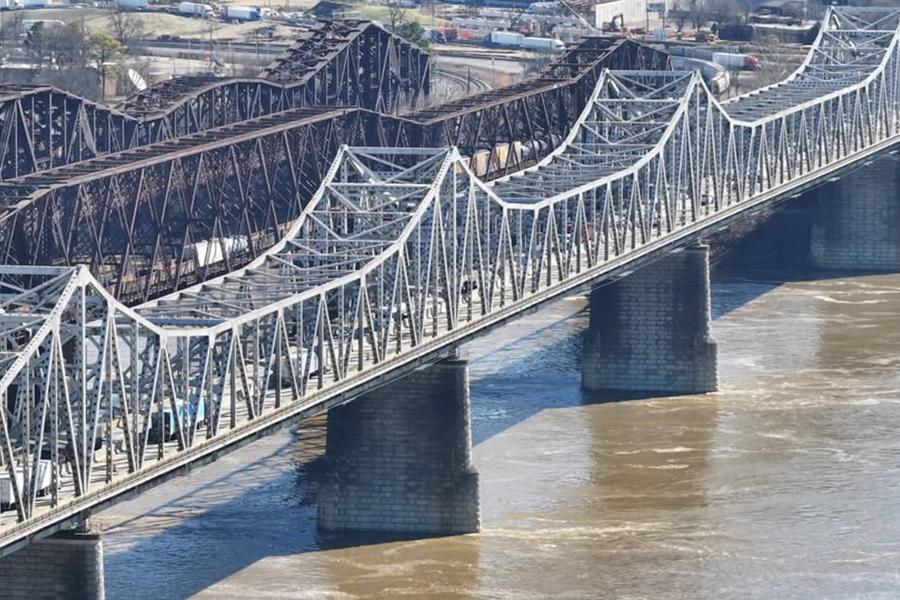
The report noted this is the tenth year in a row the state’s transportation and utilities funding needs have increased, but that some of the transportation increases can be attributed to TDOT changing guidelines on when to replace aging bridges. Approximately one-quarter of the increases to utility costs come from $146 million needed for the installation of gas and electrical services.
The report did not see any increase in broadband expenditures, but stated this is “because the inventory only captures government-owned projects, the inventory doesn’t fully capture the need for expanded access to broadband in many communities... broadband deployment in many areas relies less on municipal utilities, which are sub-entities of municipal governments, and more on privately owned entities.”
EDUCATION
Education spending accounts for the next largest amount of funds, with an estimated $19.8 billion needed to maintain the state’s education infrastructure, a 5.2% increase over the previous report. The biggest educational cost increase was 23.2% for post-secondary education, adding up to $9.1 billion.
Nearly all of the increases for post-secondary education are the results of new projects, such as the new Tennessee Technology Center at Memphis ($89 million), new Tennessee Colleges of Applied Technology ($87 million) and the Williamson County campus of Columbia State Community College ($85 million).
However, TACIR projected a decrease in costs for school renovations and new public schools and additions. An estimated $6.45 billion is needed for school renovations – down 1.2% or $77 million from the previous report – while $3.9 billion is needed for new public schools and additions – down 15.3% or $711.4 million.
With 10 new schools completed since last year’s report, an additional 64 new schools will be needed in the course of the next 5 years with each school project averaging a cost of $51 million.
HEALTH AND SAFETY
An estimated $12.7 billion is needed for health, safety, and welfare infrastructure across the state, a 1.1% increase from the previous report. Stormwater infrastructure saw the biggest increase in spending needs at 9.6% – an increase of $13.1 million – needed to maintain infrastructure.
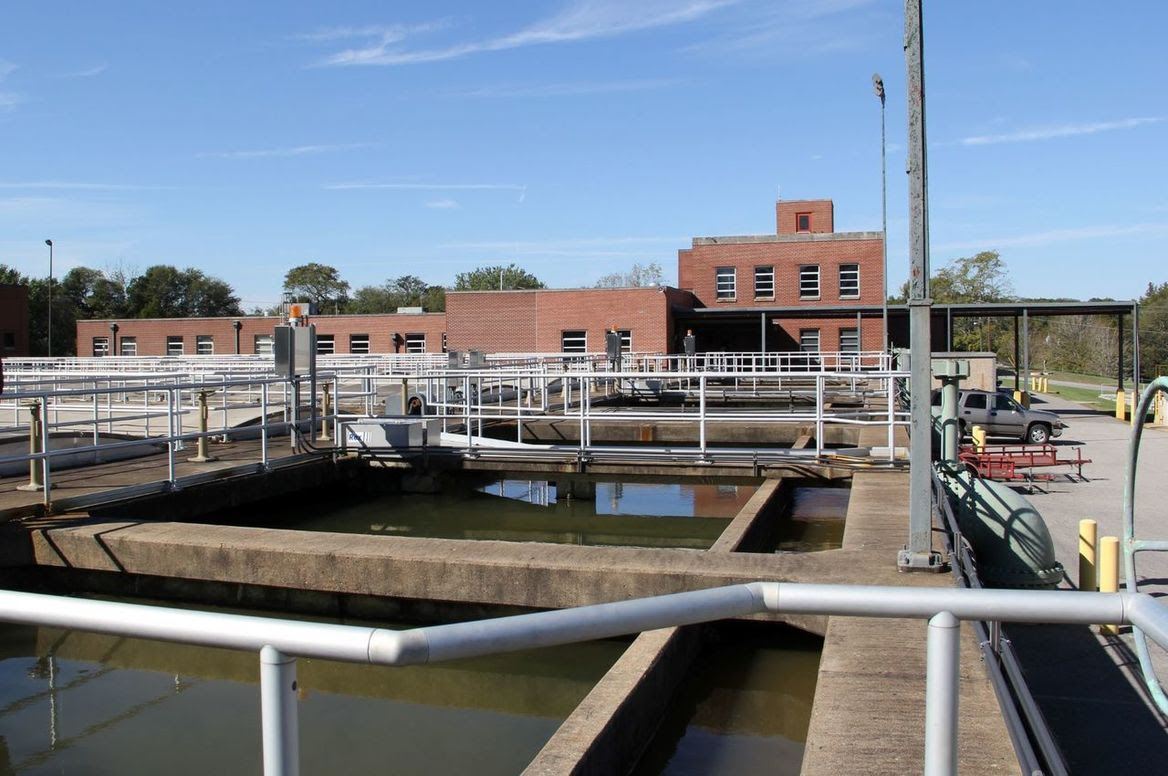
Other infrastructure that saw increases in need include water and wastewater at 3.3% and fire protection at 2.7%. However, the projected costs of law enforcement, public health facilities, and housing all decreased.
Water and wastewater had the biggest price tag at $7.27 billion - $229.3 million more than last year. Of that total cost, $306 million is needed for new projects with $431 million going to increased project costs.
RECREATION AND GOVERNMENT
The report also found $3.6 billion is needed in each category for recreation and culture infrastructure, as well as general government infrastructure.
Recreation and culture costs – which include public amenities like parks, libraries, museums, historic sites, and community development – saw a 6.8% increase in infrastructure needs, largely due to new projects totaling $119 million and $122 million in cost increases.
Large recreation projects on the horizon include a $50 million athletic complex in Clarksville, a $30 million recreation and aquatics center in Mt. Juliet, and $8 million increase in the cost of renovating the historic Cobblestone Landing in Memphis.
General government – which includes public buildings and facilities – saw a 1% decrease in spending needs, largely driven by a $56 million or 2% decrease in reported needs. This is primarily because of the competition of major projects such as the former Tennessee Library and Archives building renovation as well as the postponement of other projects.
ECONOMIC DEVELOPMENT
For economic development, the TACIR report indicated $199 million is needed, a 3.1% decrease from the previous report. This includes funding for industrial sites and parks as well as business development districts.
The needs for industrial sites and parks decreased by $5 million with the cost of existing needs largely offset by completed projects, like two industrial access projects, one in Marion County costing $2 million and one in Warren County costing $7 million. Business development district needs also decreased by $1 million.
A full copy of the report(opens in a new tab) with a county-by-county breakdown of spending needs can be found online.