

Communication is key for leaders managing public pressure, free speech regulations
By KATE COIL
TT&C Assistant Editor
Whether addressing issues in person, via email, at public meetings, during press conferences, or on social media, municipal leaders have tools to avoid legal troubles and public backlash.

Communications consultant Tom Griscom and Sam Jackson, managing partner at the Nashville offices of Spencer Fane Law, discussed how to deal with sensitive topics, public pressure, and obeying laws related to free speech and public meetings at a recent workshop during the Tennessee Municipal League’s 86th annual Conference and Expo.
Both emphasized that knee-jerk reactions often worsen tense situations. While it can be tough to face challenges from reporters, the public, or on social media, Griscom said there are three key words public officials need to remember: “Don’t feel attacked.”
“It is hard, but your first reaction when somebody says something at you angrily may be emotional,” Griscom said. “Instead, you want to pause, stop, and think through what the person said, what you want to say back, and how you want to phrase it. If you go with that emotional reaction, you may only feel great for about an hour.”
Jackson explained that sensitive issues often lead to public confrontations, which can escalate tensions.
“You are the adult in the room, and you have to act like the adult in the room,” Jackson said. “You have to act like the person you were elected to be. Your feelings can be hard to swallow, but if you go too far, there is nothing that can fix that.”
MANAGING EMOTIONS
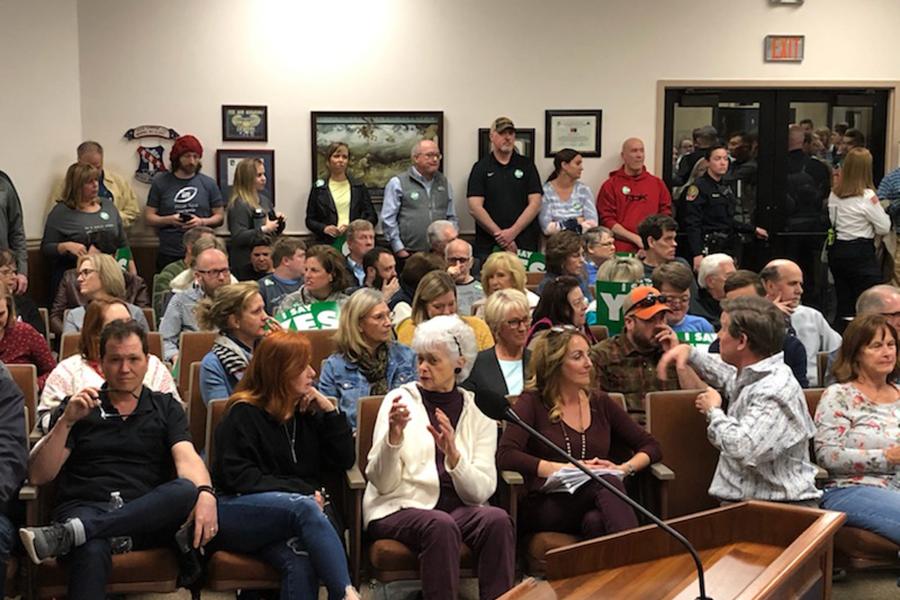
Citizens often come to public meetings already emotionally charged.
“You are the person who was elected to deal with that,” Griscom said. “We have a tendency to think that once there’s a decision, an issue is done. That fervor will die down, but I promise you those people who were fired up are still out there, and they will keep at this until it is resolved in the way they want it done.”
The job of elected officials is to guide and manage the conversation in a way that diffuses emotions. One way to do this is for city leaders and staff to monitor community conversations and prepare ahead.

“You know what you want to do, how you want to get it done, how you want to package it, and how you want to do talk it about, but you have to prepare for some anger coming from a perspective that – hopefully you’ve thought about – that disagrees with you,” Griscom said. “If someone disagrees with you, do not attack them. You want to be conversational but not like you’re on vacation. You don’t want to be up there on your phone or rolling your eyes. You are their leader. Those little things matter.”
When addressing complicated issues, think before you speak.
“If you stop and give yourself 10 seconds before you speak, you will be able to gather your thoughts and your response can be great,” Griscom said. “If it gets to a point, take extra time. However, you can’t respond to all comments or questions with ‘great question, thank you.’ They are not all great questions, and you don’t want to add credibility to what every person says.”
If leaders anticipate an issue coming to the fore, Griscom said it can be helpful to have a placeholder statement prepared ahead of time. Officials should also be concise and use active verbs when addressing concerns, both in writing and speaking.
“Sometimes, you just have so much you want to say, but if you give people five bullet points they’ll only remember three,” Griscom said. “If you get asked something, you should be able to answer in 25 words or less. That makes you think more concisely, get your points together, and keep it simple. If you speak in a long, run-on sentence, people will tune out. When you finish a statement, stop. After that first statement, they may come back and challenge you again. You have answered them. Move on.”
Griscom said public discussions should remain respectful.
“This is not the WWE; I’m not trying to wrestle you to the ground,” he said. “You may disagree with me, but that doesn’t mean you can take me apart, pick me up, and body slam me. If you do that, an hour later you’re going to regret you did that and hoping nobody took a picture. If you are up there in a meeting, just firing away at someone, they can record you, and its fair game.”
Officials also need to admit when they don’t have an answer.
“If you don’t know, don’t bluff,” Griscom said. “There is nothing wrong with saying’ I’ll get back to you.’ It isn’t a sign of weakness to acknowledge you have no clue, but you have other people in your city who work in your city who do. What you can say is, ‘that’s interesting, let me spend some time on this and get back to you.’ And actually get back to them.”
OPEN MEETINGS AND TRANSPARENCY
Before moving forward with a gut-reaction, Jackson recommends bringing in a city attorney to discuss the issue.
“I promise you, the 30 minutes to an hour of time you pay for them will be the best money you’ve ever spent versus the multiple hours and dollars you may pay later if you get it wrong,” Jackson said. “What they can do is give you the best way to make a decision, and if you end up making the wrong decision, a way to defend that decision.”
Another legal issue he sees frequently is the appearance a decision was not made transparently. More concerning than spoken conversations about a decision are emails, text messages, direct messages, and other digitally stored conversations between public officials.

“You have not only violated the Sunshine Law, there is now direct black-and-white evidence that you did,” he said. “Things can be done to cure that violation. The real problem is the damage in the media because that discussion is now public record and must be produced either via public records request or in discovery in a lawsuit. It’s not fun sitting in a chair being deposed and having comments you thought no one else would ever see brought back in front of you.”
Even if an official does not respond to comments made on a digital device, Jackson said being in a group chat alone is enough for a public official’s devices to be subpoenaed.
Jackson said, in the wake of the Charlie Kirk assassination, numerous people were fired for comments they made that produced a negative reaction. As a result, many school boards, universities, and public institutions are now having to make major payouts to individuals they fired due to public pressure.
By consulting with legal counsel before making such a move, Jackson said city officials can both ensure the decisions they are making are within the law and better defend their position if a suit results.
In recent years, Jackson said emerging groups – like sovereign citizens and First Amendment auditors – have created conversations surrounding when and where citizens can speak or film. While their actions may make officials or members of the public feel uncomfortable, it doesn’t make them illegal.
Another issue arises when officials allow one group to use a public facility but not others. For example, a city that allows a local Christian church to use a public park or community center must them also allow a mosque or the Church of Satan to use the space when asked.
When dealing with open records requests, Jackson recommends allowing municipal attorneys or legal representation to handle them before sending them out the door. Not redacting items that are attorney-client privilege or reveal private information in these requests can lead to further complications.
With the advent of artificial intelligence (AI), Jackson said putting documents that are attorney-client privilege into an open AI system can then negate the protections those documents once had.
“When you upload that letter from your lawyer into ChatGPT to summarize it, that letter is now in that database somewhere,” he said. “Because it is available for AI to search it, courts have consistently ruled that waives attorney-client privilege. The only thing courts haven’t consistently ruled on is whether that waives the privilege for just that letter or every communication between you and your legal representative.”