
Lee delivers eighth State of the State
By KATE COIL
TT&C Assistant Editor
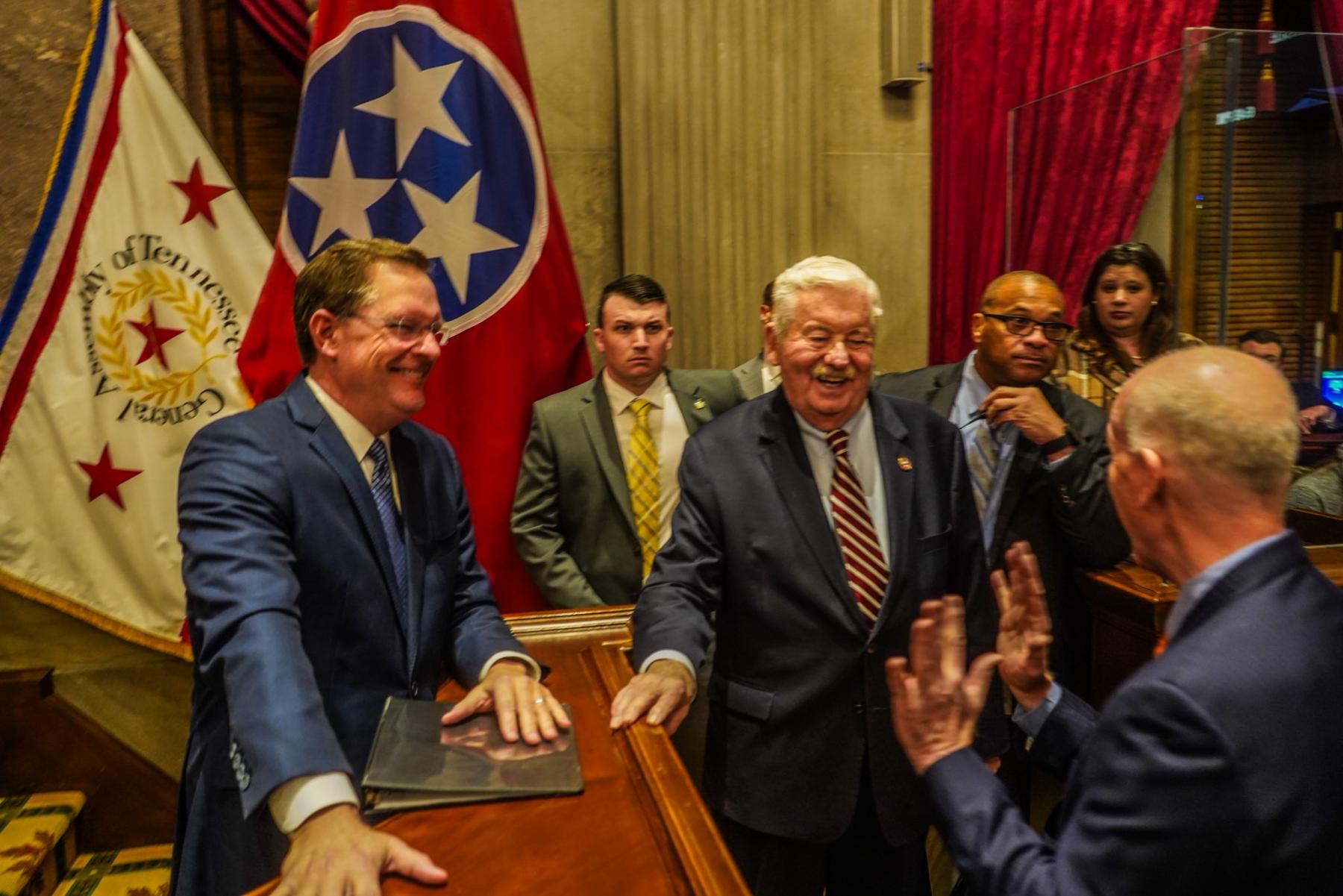
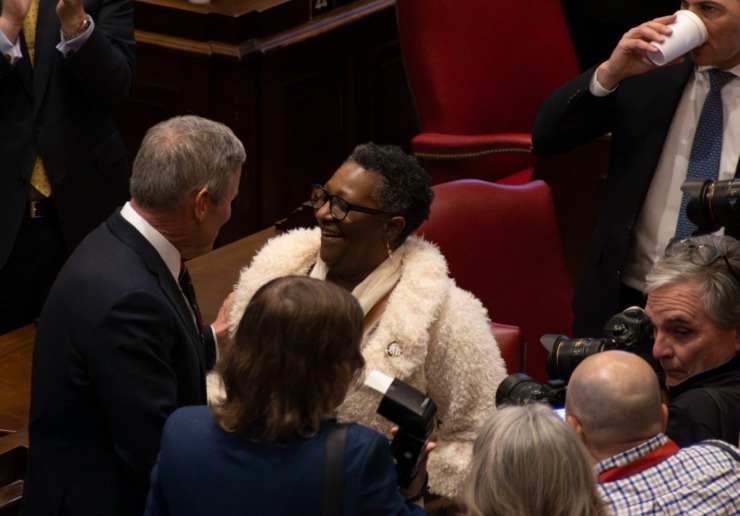
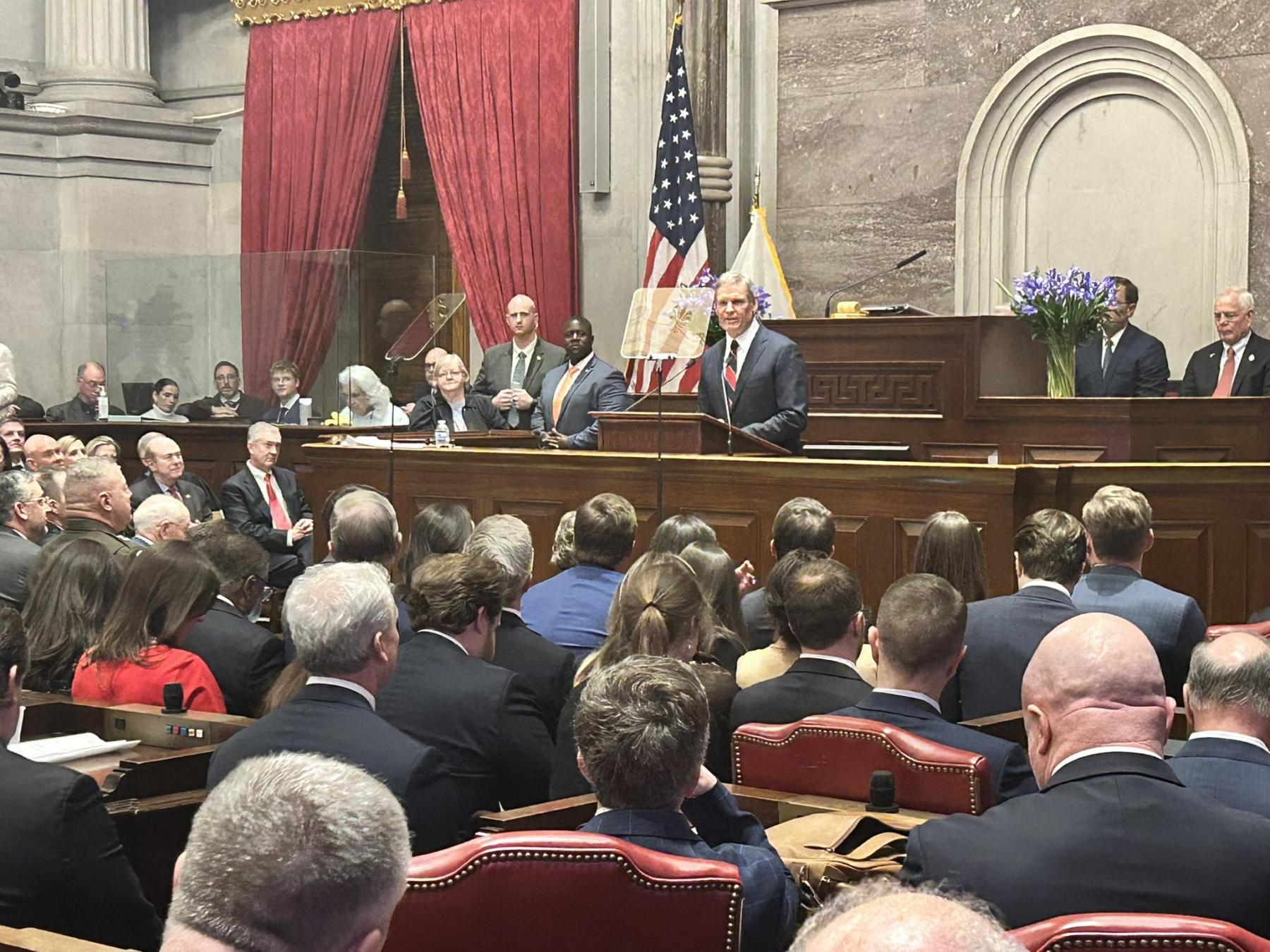
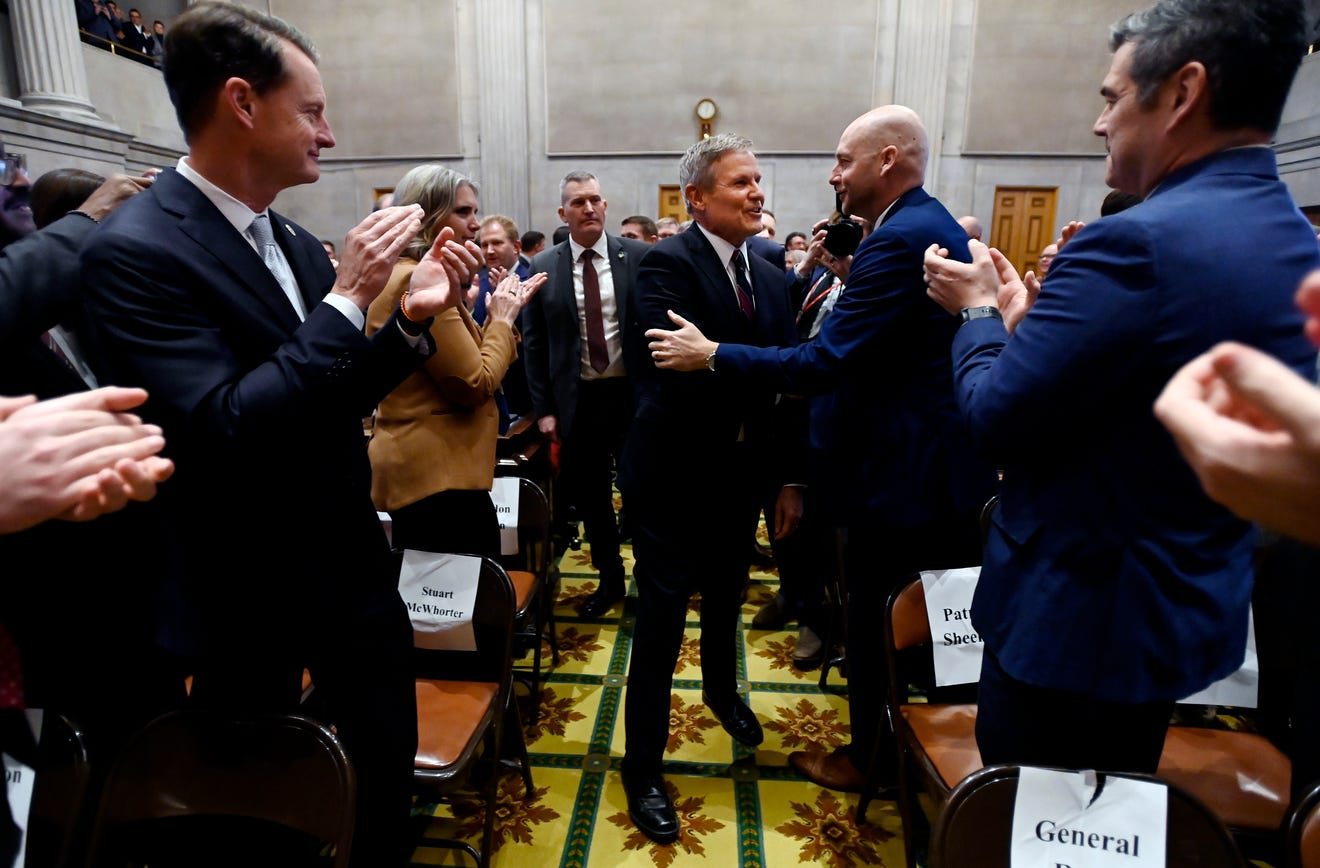
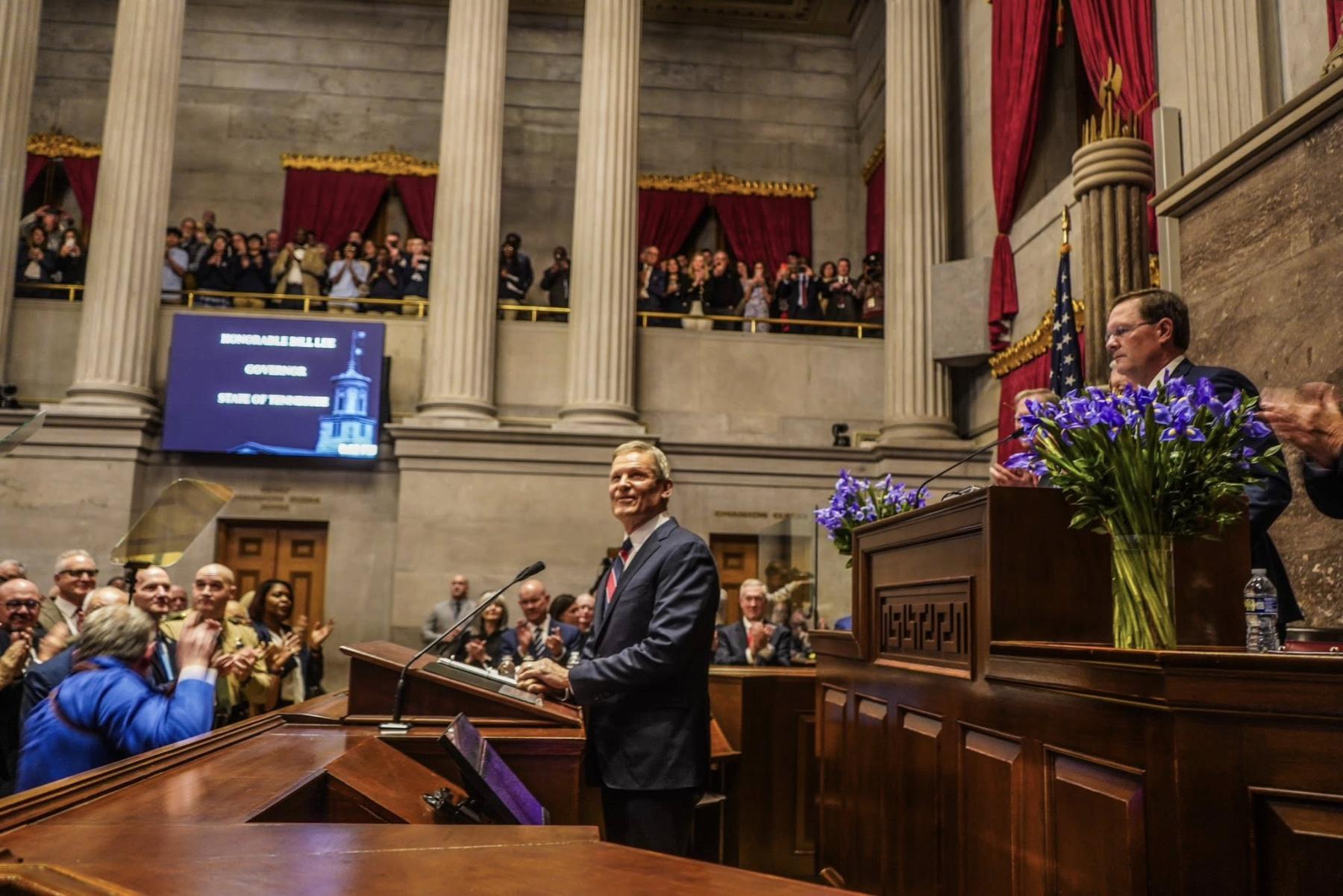
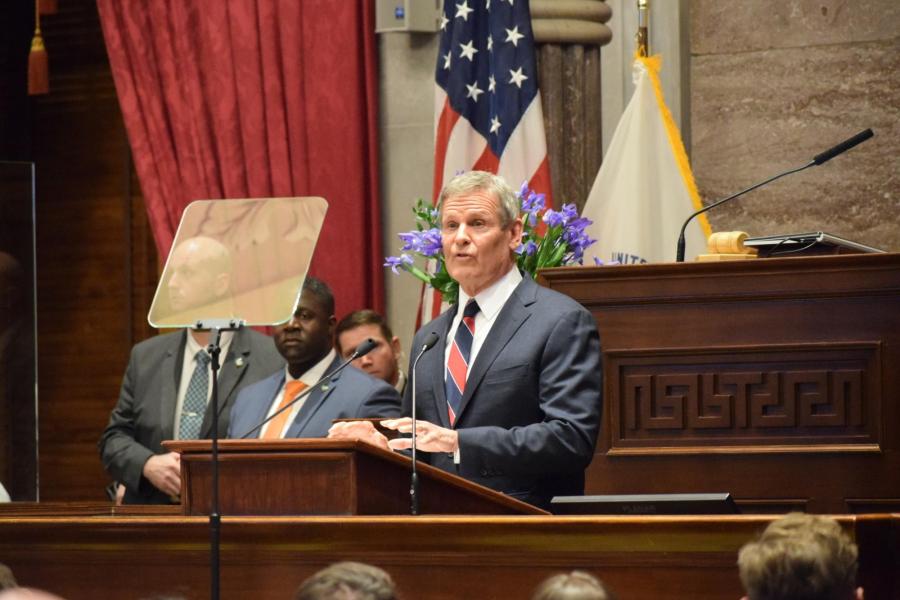
Gov. Bill Lee delivered his eighth and final State of the State Address(opens in a new tab) on Feb. 2 before the Tennessee General Assembly, highlighting priorities including expanding the school voucher program, crime in Memphis, and nuclear investment, amid pledges to also cut the state budget.
Titled “Tennessee: The Original Frontier,” Lee began the speech recognizing the lives lost and continued power outages experienced due to Winter Storm Fern. He also reflected on his time as governor as it comes to a close.

“In 2019, when I walked through those doors into this chamber for the very first time, I had great excitement for what we, together, could and would deliver for the people of Tennessee,” Lee said. “With seven years under our belt and the gray hair to show for it, we have delivered, but I could never have predicted the journey we would embark upon together. I now know that it’s impossible to fully appreciate the value of a relationship between a governor and a general assembly until you’re submerged in the deep end together, solving serious problems and yes, sometimes wrestling it out, but always looking for opportunities to make life better for the seven million people we serve.”
Lee also mentioned Tennessee’s role in 250 years of American history and a desire for the state to continue its reputation for forging new frontiers. He cited education as one of those new frontiers, touting $2.5 billion investments in public schools under his administration with an additional $340 million in the coming budget. He also asked to double the number of Education Freedom Scholarships – known as school vouchers – to 40,000.
Additionally, Lee cited Memphis crime as an example of challenges that “actually span governors and span decades.”
“Memphis crime has been one of our most frustrating challenges that many of you in this room tonight wrestled with long before I came into office,” Lee said. “From day one, we have looked for opportunities to create lasting change in a city that is more than worth fighting for. Over the years, good faith efforts have resulted in incremental progress, and that deserves recognition.”
Lee cited the Memphis Safe Task Force for helping to reduce crime in Shelby County by 55%, making 5,500 arrests, and finding numerous missing children. He called for $80 million in grants to add 100 state troopers to Shelby County. He also advocated for increasing the number of state troopers serving statewide to a benchmark of 1,300.

To combat the rural healthcare crisis, Lee said the federal Rural Health Transformation Fund will provide the state with more than $1 billion over the next 5 years to help rural hospitals, EMS, and primary care doctors. However, he said, “government overregulation stands in the way” and asked for the changes to existing Certificate of Need laws, which Lee said have blocked $1.5 billion in healthcare investment in Tennessee since 2000.
As part of his economic proposals, Lee cited investments like BlueOval City, Oracle, xAi, Orano, and In-N-Out. He also called for an additional $25 million to the Nuclear Fund as part of continued economic investment, as well as the new Tennessee Quantum Initiative, a statewide effort to position Tennessee as the national leader in quantum research, infrastructure, and workforce development.
Lee’s $57.9 billion budget also includes:
Economic Opportunity & Tax Relief
- $20 million investment in Tennessee’s Rainy Day Fund
- $8 million to expand the Tennessee Youth Employment Program
- $25 million in further investment in the Tennessee Entertainment Commission
Infrastructure & Housing
- $425 million to the Tennessee Department of Transportation for infrastructure
- $165 million to renovate and replace Tennessee’s rest areas and welcome centers
- $56.2 million to support infrastructure needs for commercial and general aviation
- $30 million to create the Starter Home Revolving Loan Fund to support construction of new, affordable starter homes for hardworking Tennesseans, prioritizing rural communities
- $25 million further investment in the Rural Development Fund
- $1.5 million to bring more direct international flights to Tennessee
Education
- $339 million for programs including the Tennessee Investment in Student Achievement formula funding, summer learning camps, and raising starting teacher pay to $50,000
- $20 million for K-12 facilities and maintenance grants at public schools
- $40 million to support facilities improvements at public charter schools
- $3 million to expand the school-based behavioral health liaison program
- $155 million to double Education Freedom Scholarships
Higher Education
- $350 million to fund construction of a new College of Medicine Interdisciplinary Building at University of Tennessee Health Science Center in Memphis
- $71.7 million to support capital maintenance projects at Tennessee’s higher education institutions
- $10 million further investment in the Governor’s Investment in Vocational Education program to support nuclear workforce education, as recommended by the Nuclear Energy Advisory Council
- $3 million for Next-Gen Academies at Tennessee Tech University for nuclear and cyber technologies
- $39.4 million to fully fund the outcomes-based funding formula, which may be used for program improvements that assist higher education institutions in meeting outcomes including student progression, degree production, research and service, efficiency metrics, and other measures related to institutional mission
- $3.5 million for the Corrections Education Investment Initiative
Healthcare and Families
- $205 million utilizing Shared Savings to strengthen healthcare initiatives, including funding Rural Health Transformation Resiliency Grants
- $230 million to TennCare to cover increasing costs associated with medical inflation, including higher prescription drug prices and Medicare payments, and increased utilization and services
- $34.5 million to Department of Children’s Services (DCS) to assist with reducing caseload ratios
- $10.7 million to enhance staff safety at DCS facilities that accommodate delinquent youth
- $15 million for capital project and maintenance grants to YMCAs across Tennessee
- $24.2 million to continue a Department of Health Dental Pilot Program to address unmet dental service needs and increase the number of dentists in Tennessee
- $1 million non-recurring grant to non-profit partner Live Like Lou Foundation for ALS research
- $500k recurring grant to non-profit partner The Next Door to assist women in recovery from substance use
- $500k recurring grant to non-profit partner The Jason Foundation, which provides educational and awareness programs related to youth suicide
- $250k recurring grant to non-profit partner Families Free, which provides treatment, education, and intervention services to families
Safe Neighborhoods
- $100 million to bolster the Governor’s Response and Recovery Fund which provides support to individuals, businesses, and communities after natural disasters
- $80 million for public safety grants to enhance crime prevention and increase public safety in Memphis
- $83 million to Tennessee Department of the Military for construction of a new Army Aviation Support Facility in Rutherford County
- $37.5 million for salary increases and creation of an additional 50 State Trooper and related support staff positions to improve public safety across the state
- $20 million for capital improvements at the West Tennessee and East Tennessee Regional Juvenile Justice Centers
- $1.7 million recurring grants to non-profit partners that combat human trafficking and support survivors
- $1 million recurring grant to non-profit partner Men of Valor, which provides faith-based reentry support for incarcerated individuals
- $250k recurring grant to Lipscomb University’s LIFE Program, which provides higher education opportunities for incarcerated individuals
- $500k recurring grant to non-profit partner Tennessee Prison Outreach Ministry, which provides faith-based reentry support for individuals and their families
Conservation
- $81.6 million to create three new Tennessee State Parks, creating a total of 14 new state parks under Gov. Lee’s leadership, setting the Tennessee record for the most state parks created by one administration
- $1.6 million for the Subsurface Sewage Disposal Program, reducing waiting times for permitting services and oversight
- $1.1 million to support further enhancement of Tennessee’s electric grid
Nuclear Energy & Innovation
- $50 million to continue Tennessee’s efforts to lead the nation in adoption of artificial intelligence technology and make government work more efficiently for Tennesseans
- $25 million further investment in the Nuclear Energy Fund to attract advanced nuclear technology companies, ensuring Tennessee continues leading the nation as the epicenter of America’s nuclear renaissance
- $20 million to complete the relocation of the North Data Center
- $20 million to accelerate Tennessee’s quantum computing industry by attracting substantial federal and private-sector investment and to translate our scientific strengths into durable, high-wage job creation across advanced manufacturing, life sciences and logistics industries
- $2 million to aid in the expansion of agricultural technologies in rural communities