

State officials expressing concern over spread of new, deadly synthetic opioid
By KATE COIL
TT&C Assistant Editor
Officials are raising awareness about a new synthetic opioid linked to nearly 35 deaths in East Tennessee.
Tennessee Bureau of Investigation (TBI) spokesperson Leslie Earhart said N-propionitrile chlorphine, also known as cychlorphine, is an emerging synthetic opioid with no known approved or medical use. According to provision data from the Tennessee Department of Health, cychlorphine is 10 times more potent than fentanyl and may be associated with more than 1,633 fatal overdoses in Tennessee since 2024.

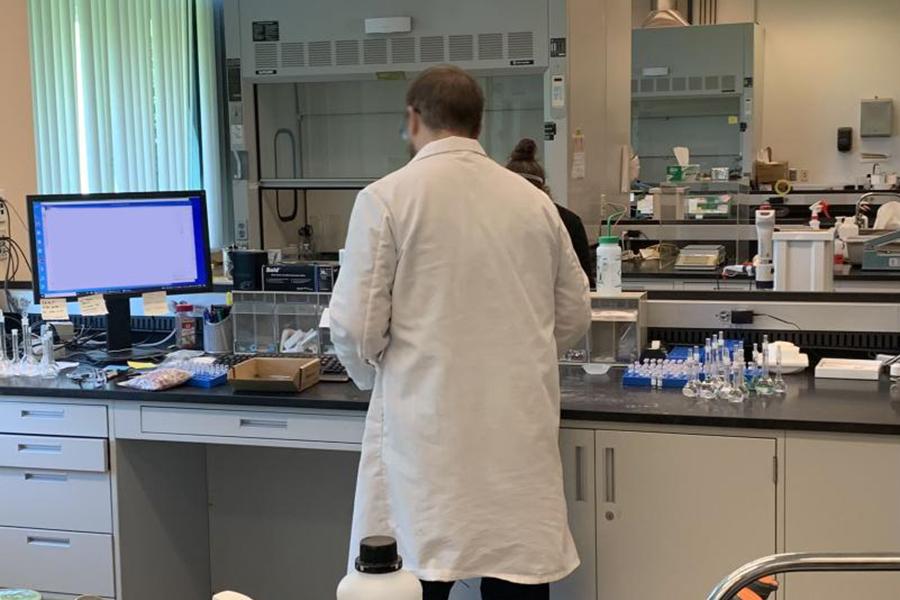
“The TBI Crime Lab’s Forensic Chemistry Unit dealt with N-propionitrile chlorphine (cychlorphine) for the first time last year. To date, 34 submissions have tested positive,” Earhart said. “All of those submissions were from law enforcement agencies in East Tennessee. In some cases, N-propionitrile chlorphine is detected in combination with methamphetamine, cocaine, and fentanyl. Cychlorphine belongs to an emerging subclass of novel synthetic opioids known as orphines. It’s more potent than fentanyl.”
According to the Drug Enforcement Agency (DEA), the first reports of cychlorphine in the U.S. were detected by a lab in Florida in 2024. In addition to state laboratories, DEA labs had identified 22 confirmed samples of the substance nationwide as of January 2026. Deaths linked to the drug have also been reported in Florida, New York, Pennsylvania, Illinois, Louisiana, Texas, Washington, Nevada, and California.
The Center for Forensic Science Research and Education (CFSRE) issued a public alert(opens in a new tab) at the end of January to warn researchers, labs, and law enforcement following a rapid increase in detection of the drug. CFSRE said 14 of the 25 cychlorphine cases reported to them had involved its use alongside another substance. The organization said cychlorphine is the latest in “an alarming increase in deaths linked to synthetic opioids” in recent years.
A total of 11 cases were detected in East Tennessee in 2025, with Greene County seeing the most cases with 5. Since the year began, there have been 23 cases reported to date, with Sevier County seeing the most at 8 and Knox County the second most at 6.
Chris Thomas, chief administrative officer and director of the Knox County Regional Forensic Center, said Tennessee may be reporting more cases of cychlorphine-related overdoses not because the drug is more prominent in Tennessee but because Tennessee has better abilities to test for it.
“Many medical examiners across the state lack the resources and funding to perform toxicology, or turn-around time may be slower,” Thomas said. “Only a few research labs currently can detect this. We send every suspected sample to the DEA for quantification and conformation. We do more toxicology than most.”
Thomas said cychlorphine is so concerning because it is more powerful than fentanyl, fatal in extremely low quantities, and is more resistant to medicines used to reverse overdose effects.

“It possibly has longer lasting binding receptors, which makes naloxone less effective,” he said. “Knox County Health Department epidemiologists looked at the data and determined most of these fatal overdoses were involving low income, middle- to upper-aged individuals with unstable housing.”
While testing has only shown cychlorphine in cases in East Tennessee, Earhart said they expect it to spread to other parts of the state.
“Unfortunately, there is no way to identify the substance until it has been submitted to the TBI Crime Lab for analysis,” she said. “If an agency has questions, we urge them to reach out to us. We have TBI agents assigned to every county across the state, and they stand ready to provide investigative and analytical support when needed.”
In the meantime, Earhart said any local leaders or law enforcement agencies with questions or concerns can contact TBI.
“TBI special agents assigned to the Drug Investigation Division are actively working with local, state, and federal agencies to identify suppliers,” she said. “We urge local agencies to contact us with any questions. We will provide additional information to law enforcement and to the public as we learn more about this drug.”
Carrying naloxone can be lifesaving. People who use opioids, have close friends or family members who do, or are likely to be in contact with someone who uses opioids, should consider carrying it. Naloxone can be obtained from Regional Prevention Specialists(opens in a new tab) with the Tennessee Department of Mental Health and Substance Abuse Services or contacting one of Tennessee’s local Health Departments(opens in a new tab).
If you or someone you know uses opioids or needs treatment for substance use, visit the Find Help Now website or call the TN Redline at 1-800-889-9789. Contact Safe Spot at 800-972-0590 for 24/7 live support in an overdose crisis.