

Technology plays increasing role in how cities respond to, plan for major events
By KATE COIL
TT&C Assistant Editor
From natural disasters to major community gatherings, IT provides a critical backbone for how municipalities and emergency officials respond.

Digital infrastructure plays a critical role in telecommunications, resiliency, and operational management. Officials often need to coordinate with each other and with service providers to ensure they can meet public demand for crowd and traffic control and emergency response for planned events – such as a large outdoor concert or Fourth of July fireworks – as well as unplanned incidents – such as natural disasters or traffic congestion created by a crash.
Robert White serves as the transportation systems management and operations manager for the Nashville Department of Transportation (NDOT) as well as holds responsibilities with the city’s information technology services department and special events. White said the city of Nashville hosts some 4,000 special events each year with the largest including the downtown Fourth of July concert, CMA Fest, and the Music City Grand Prix.
These events require NDOT to coordinate with police and emergency services to ensure that everyone remains safe. However, every Friday and Saturday night on Broadway in Nashville can also feel like a “special event.”
“Every time a country music star decides to have a pop-up at his honkytonk and puts it social media, it is a special event,” White said. “I have a staff member whose only job is to review special event applications in the mayor’s office. When Post Malone was going to be opening his bar, he said he was going to have only a few local people doing performances, wasn’t going to serve alcohol, and was only going to have 5,000 people. A week before the event, Gordon Ramsey announced he would be handing out alcohol at the event, and Post Malone announced the event would be free, and he would perform. That event went from 5,000 people to 75,000. Those types of challenges are what we have to deal with on a weekly basis.”
EMERGENCY RESPONSE
T-Mobile for Government Senior Manager Derek Usner often works with municipalities and local governments to handle digital infrastructure issues, such as cellular and digital communications. Usner said special events create a surge demand for physical and digital infrastructure.

“Cellular is a finite resource; there are only a certain number of lanes on the [digital] highway,” Usner said. “Our approach is to prioritize traffic for first responders. We want to make sure they have their own dedicated lanes on the highway. You can’t build a cellular network that on a normal day has 5,000 people but can grow to have 75,000 per day. What we prioritize is early conversations with clients to determine when major events are coming up. That could mean we add an additional fiber circuit or power. I think it’s important to give as much time and as much planning to your vendor, and ideally you can give them three to six months notice for a substantial event.”
Usner said he works with TEMA and the various emergency management agencies in the state to identify needs and conduct table-top exercises to prepare. He also said it is important for officials to keep their providers and carriers informed about their needs as they grow and change.
“When it comes time to respond to a disaster, all carriers are in the same boat-- we want to help and keep communication open,” he said.
White said Nashville also relies on fiber services for communication signals during emergency response.
“It is all about communication,” he said. “Two thirds of Nashville runs on cellular and old copper. If it starts to rain, we know those signals will go down and we have to plan for it. We have to keep in contact with emergency management and all the providers. That's one of the reasons why we rely on fiber. We are also already starting to plan for the Fourth of July. You could put a cell tower on every building downtown, and [with that many people downtown] it wouldn’t be enough to allow communication.”
Broadway will have a 20-foot center traffic lane that will remain open for fire and emergency vehicles. Last year, White said traffic blocked emergency access that prevented responders from quickly responding to individuals suffering from heatstroke and complications due to alcohol.
“You can’t block off all roads and sidewalks,” he said. “There has to be room to move around.”
Usner said it is also important to reflect back on previous events to see how capacity held up, what type of support was needed for an event, and what can be done differently next time to prevent problems.
“We look at the past and try to protect the future,” Usner said. “We will reposition assets around the country to support natural disasters.”
TRAFFIC FLOW
White said one of the biggest challenges that Nashville faces is that most of the city’s large events occur in a roughly five-square-mile area known as the Downtown Loop. This area is home to Nissan Stadium, Bridgestone Arena, Country Music Hall of Fame, Ascend Amphitheatre, Broadway, Ryman Auditorium, Municipal Auditorium, Tennessee State Capital, and numerous corporate office buildings. It can be difficult to manage one gathering at any of these locations, and White said there have been weekends when most-- if not all-- of the city’s big venues are hosting visitors.

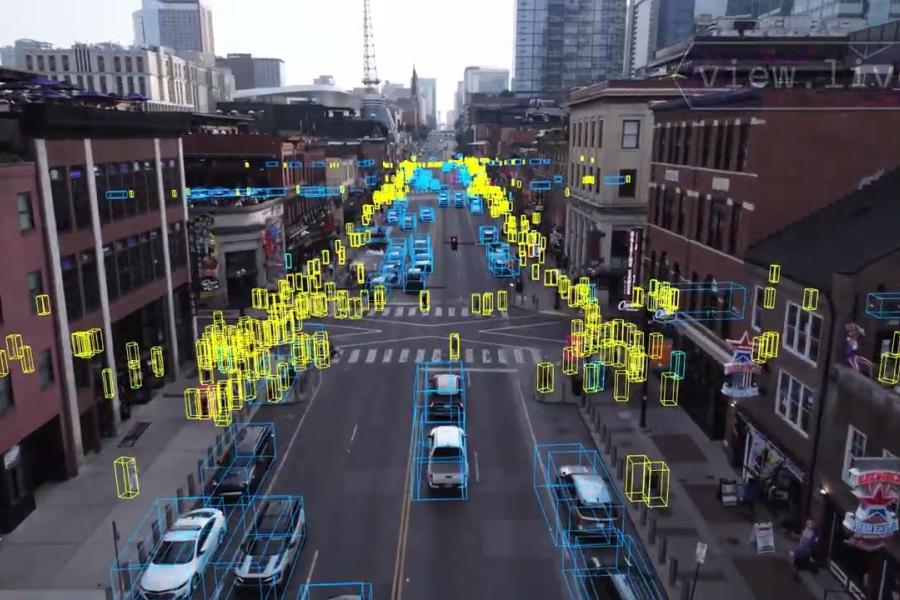
Nashville has also worked with researchers at Vanderbilt University to install Light Detection and Ranging (LiDAR) infrastructure on Broadway. This allows White to keep track of the number of pedestrians and vehicles in the area to inform decisions on public safety and traffic flow. The fiber network also supports this system.
White said Nashville is also participating in Google’s Project Green Light, a research initiative aimed at lowering traffic emissions using AI. The service enables officials to manually implement changes to traffic and pedestrian signals and reroute vehicle and foot traffic away from congested routes.
“It used to take three hours to flush traffic from Nissan Stadium when a game or concert would end,” White said. “We started using the data to see what direction the traffic was going in. By changing the traffic signals to what we call a flush plan, we went from it taking three hours to 45 minutes.”
Nashville also coordinates with the Tennessee Department of Transportation through Project Green Light to manage congested interstate traffic. Local police work with White to use this tool to help direct traffic away from areas where a crash has occurred so it can be cleared more efficiently.
FUTURE PLANNING
Usner said his company is beginning to use AI and analytics to help guide its terrestrial networks to reroute capacity to where it is needed most duringlarge events or disasters. He said they have been working with local emergency responders to pilot these programs.

With more development coming to Nashville’s East Bank – including a new Titans Stadium – White said the city is already building contingency plans. The new stadium will seat fewer people, but the new construction of Google and Oracle facilities in the area will also reduce available parking. White said the city is working with the city’s WeGo bus, shuttle, and train services, as well as rideshares and micromobility companies to plan ahead.
“What we don’t want is that shark pattern where people keep circling the block looking for parking,” White said. “Waze has a function that alerts people to where parking is available, and so we are working with them on that. We are also working on digital signage that will direct people to those areas. It’s going to be a challenge, because with all of the construction over there, we are going to lose 700 parking spaces.”
Based on data collected from the John Siegenthaler Pedestrian Bridge, White said Google is helping the city direct pedestrians on routes home after concerts. The company is also working to build another pedestrian bridge that will connect Nashville’s East Bank to the Germantown neighborhood.
For events inside the stadium, Usner said carriers can use cellular, wifi, and Bluetooth technology to help organizers with traffic issues. Smart sensors can indicate which bathrooms or pathways to seats are being overused or under-used. He said they can also alert staff that a bathroom may need cleaning because of how many people have gone into it.
Ultimately, Usner said thinking about and planning for all contingencies ensures that IT services can best serve officials, emergency responders, and the public.
“You can try to plan for everything, but there is always something there that you cannot predict,” Usner said. “Preparation is key and as much time you can give to everyone supporting that event is critical to success. I have also lived through Hurricane Katrina and Hurricane Helene. There is little you can do to prepare for something that catastrophic, but having as many contingency plans is essential. Things will happen and communications infrastructure becomes more critical. Having as many options as you can budget for is the way to go.”