
Goodlettsville's Ellis discusses career, future of city management
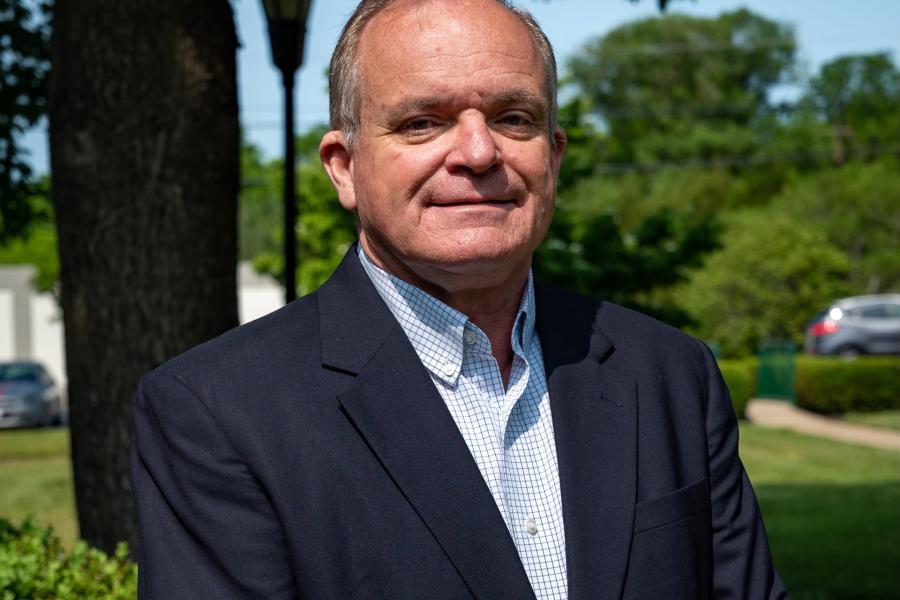
By KATE COIL
TT&C Assistant Editor
After nearly 40 years of service in local government, Goodlettsville City Manager Tim Ellis will retire Sept. 30, 2026.

Ellis caps off his distinguished career in public service after 15 years as city manager of Goodlettsville. During his tenure, the city’s bond rating has improved to AA2, city revenues from local options sales tax increased 46% over five years, and numerous parks and public infrastructure projects were completed.
Ellis also saw the city earn a Level 1 Award for Workplace Efficiencies from the Tennessee Center for Performance of Excellence, along with the successful acquisition and administration of $50 million in grant funding.
In addition to serving as city manager since 2011, he spent four years as Goodlettsville’s assistant city manager and three years as the city’s director of parks, recreation, and tourism.
Prior to coming to Goodlettsville in 2003, Ellis spent more than 14 years as director of parks, recreation, and cultural arts for the city of White House and nearly three years as recreation supervisor for the city of Springfield.
Ellis has also served as a past president and board member of the Tennessee City Management Association (TCMA) and on the boards of the Tennessee Municipal League, Forward Sumner Economic Partnership, and USDA’s Land Between the Lakes Advisory Board. He has also been a trustee of the state’s Consolidated Retirement System Board.
He was selected as the TCMA City Manager of the Year in 2017. Ellis is an ICMA-credentialed manager through the International City/County Management Association (ICMA) and a certified public manager through the University of Tennessee’s Institute of Public Service.
TT&C: You began your career in parks and recreation. How did you transition from that to city management?
Tim Ellis: My grandfather was in public service for 32 years. My dad was in public service for 37 years. I had always been around some element of public service. Toward the midpoint in my career, I had discovered that everything was becoming the same thing every day to me, and I would like to learn more. I really wasn’t going to be able to achieve that in the parks and recreation field. Most of what I was doing in parksand recreation was really on the side of capital projects and development of recreational services.When the opportunity for assistant city manager in Goodlettsville came about, I was appointed to that position, and it allowed me to grow further. At that point, I had about 22 years in local government. I had seen it all, but not really done it all. I took that opportunity, and it allowed me to once again grow and learn.
TT&C: What do you think has been the biggest change to how cities are managed in the course of your career?
TE: In 15 years as city manager, the culture we are living in has changed. The demand for services with less and less money is extremely prevalent. People want everything, but they want what they pay to stay the same. The second part of that is the political and civic mindsets of communities, elected officials, and even government employees have changed. There are some people who think everything has to be an argument for anything to get achieved, rather than just sitting down, figuring out what needs to be done, and planning how to get there.

TT&C: Goodlettsville is one of a handful of Tennessee municipalities that is located in more than one county. What unique challenges and opportunities does this present?
TE: We are not just in two counties, we are the only municipality in the U.S. that is in two counties where one of those counties is a metropolitan form of government. That is really unheard of. It presents great opportunities, because you can feed off of each county government somewhat. It’s unique in that there are differences in each county. We haven’t been able to annex territory in Davidson County since 1963, which no one really thought would be a problem. When they built the RiverGate Mall, however, they built it right across the city limits. Some of the building was in Goodlettsville and some was not. We also have some homes built across city limit lines. However, we collect a lot of money on visitors to Nashville. Coming out of a branding plan that was recently done, Goodlettsville is the front door to Nashville. If you are coming from the north, you have to come through Goodlettsville to get to Nashville. We try to capitalize on that.
TT&C: Like much of Middle Tennessee, Goodlettsville has experienced a great deal of growth in your tenure with the city. How do you manage balancing the desire for growth with maintaining community identity?
TE: We have not grown as rapidly as some of the other communities, because we really want smart growth. One of our challenges is that a lot of our community is either on a hillside or in a floodplain, but we have managed growth. We recently pushed the pause button to reinvent our comprehensive land use plan to make sure that as Goodlettsville grows it is growing in a manner our residents want to see it grow, not what the world around us wants. That is one of the things a lot of communities fall prey to: that they feel pressure from what is going on in the world around them. They think ‘we have to match this’ or ‘we have to match that.’ Really and truly, it is matching what your constituents envision their community to be.
One example is the RiverGate Mall redevelopment. In seeking all that out and working through all the components with a suitable developer, working through the public finance piece of it, and making sure that met up with what we wanted for our comprehensive public plan. That is a high-quality, mixed-used development with a blend of commercial, office, residential, and entertainment. This was truly a partnership between Metro Nashville and the city of Goodlettsville because, at the end of the day, all of it’s in Davidson County, but a large portion of it is in the city of Goodlettsville.
A lot of what we are seeing in Goodlettsville is either new development or redevelopment. Going from one city to the other, we have about 210,000 cars a day. If you have that many people driving through your city, a certain portion are going to eat, stop, and stay. That is something we try to capitalize on-- our hospitality industry.

TT&C: Because of its proximity to Nashville, Goodlettsville deals withcongestion and traffic issues similar to much larger cities. How do you approach balancing projects the city may need – like road improvements – versus other projects that may seem more eye-catching to the public?
TE: You have to anticipate what is happening currently and what will happen long term. If you are anywhere in the Nashville region and traffic isn’t at the top of your priority list, I’d like to come visit your town. We have about $10 million in grants for traffic synchronization grants in our city. That is one of the things we have been blessed with-- we can utilize a lot of grant funding.
Our Main Street corridor is in the process of being redeveloped. It will have bright eight-foot sidewalks, decorative lighting, and landscaping. And no one will ever notice that synchronization and traffic flow will improve as well. One of the other parts of this is you have your general operations, your public safety, streets, and highways, and parks budgets, but the normal resident doesn’t understand that. Utilities are a whole different part of the operations with their own funding. Public education in how government works is kind of paramount because there is a total lack of understanding in that regard.
TT&C: What would you categorize as the biggest challenge you have faced in your career, and how did you tackle that?
TE: There have been a few, and not all of them have had just me solving them. It has been community centric. When I was at White House, as a community we approved impact fees and a sales tax referendum solely for parks and recreation. That has allowed them, as growth has occurred, to really stay ahead of the curve when it comes to financing.
From the city manager side of things, we’ve talked about a lot of funding for many of these projects. How we achieved that is no longer just submitting grant applications; we made sure we submitted great grant applications. Because we took the extra effort, utilized teams, or even in some cases outside sources, we have been very successful in attaining those grants for many different things from buying fire equipment to building roads, traffic signals, park facilities, splash pads, accessible playgrounds, and our Main Street project. From a city manager side of things, when you look at what you want to do and forecast your revenue and so forth, how we have been able to achieve a lot of that is through external funding that isn’t really costing the city that much.
TT&C: What would you say is your biggest accomplishment as a city manager?
TE: The two that will be the biggest accomplishments will be that $20 million Main Street Project, the RiverGate redevelopment – which has been huge – and the growth in our public safety. The growth in our park system is also great. When I leave, we will have added four new parks to our system.
TT&C: What is the most rewarding thing about what you do?
TE: Even on your worst day, when you see a resident is excited about living here, excited about the services we provide, you see their children playing on the playground, or them talking a police officer, your day has been made. Even though in public management you are really looking at numbers and how to achieve or provide the greatest services possible, there is always that feeling of reward when you see people enjoying the work you and others have done to maintain that for them.
TT&C: What, in your opinion, makes a good city manager and why?
TE: They need to be a life-long learner. The world is changing around us, and you have to adapt to that. The other part is someone who has a well-rounded experience. I feel like coming from the parks and recreation side allowed me to be more accustomed to the different parts of a city. They really need to be able to learn how and why we do things. The third thing is to develop great friendships and mentorships that allow you to have a person or two or four or five you can reference and go back to. I think that’s one of the things in my career, besides my family’s experience of public service, is the fact that I have had great people that I have worked for, worked with, and have been associated with that I feel are great friends and, in many cases, great mentors to me.

TT&C: How do you advise city managers approach identifying, growing, and retaining public servants and the next generation of municipal leaders?
TE: Identifying talent can be one of the hardest things there is. You can’t just identify the talent; you have to help them grow. Identify the resources they need to learn. If they want to really achieve success, you will see them take advantage of everything you lay out for them to grow. Don’t be dependent on a third party to help these people grow. Be that mentor to that person. Be able to ask them how they think things went. Never say “I’m not sure that worked out the right way.” Instead, ask “do you think that worked out how you felt like it should?” and let them critique themselves.
TT&C: What do you think will the biggest challenge for the next generation of city management professionals? What advice do you have for them?
TE: The biggest challenge I see is we have got to do a better job of engaging the younger generation about public service and what pubic service truly means. In a lot of cases, there is this false idea they are just working for the city. If they are going to be successful, they are really a public servant, which comes with a certain level of expectation. We have to help them along. If they don’t have a mentor and you’re not the right person to be that mentor, help them get aligned with someone in the area they want to work in who will take the time and walk through that.
One of the greatest issues right now, to me, is the total lack of civility and statesmanship in carrying out the operations of governance. The saddest part of that is the younger generation is seeing it as the norm. They think they have to act like that to achieve anything. While most of that is in the political environment, it does bleed over. The younger generation needs to realize it has to operate with a certain level of ability and working together. From everything everybody sees in the world, cooperation seems non-existent. We need more practicum and internship hours so, not only are these folks graduating with a degree, they have a certain level of field knowledge of what government looks like. Otherwise, they don’t have a clue what they’re getting into.
ICMA and TCMA all have codes of ethics they require you to follow. One thing I would encourage everyone to do is go by ethics, use your ethical barometer to do the right things for the right reasons, and no matter what, do not let that change. I also encourage city managers to reach out to their counterparts and make sure they’re OK. They may be having a hard time or facing a tough situation in their city. They may not be able to talk about it, but it can mean a lot to them to have someone call and check on them. Everyone goes through those times, and taking care of your fellow local government officials is important.