

Tennessee's aging utilties face challenges from growing technology, population base
By KATE COIL
TT&C Assistant Editor
With Tennessee’s population projected to hit 9 million by 2050 and the increased electricity needed for electric vehicles and data centers, municipalities need to be more proactive than ever when considering how new growth could affect utility demands.

Jon Sparkman, director of engineering with Tennessee American Water, and Scott Stephens, vice president of business development with SiteLogiq, discussed the future of water and electricity usage during a workshop facilitated by Warren Nevad, UT-MTAS management consultant and director of the Tennessee Renewable Energy & Economic Development Council, at the Tennessee Municipal League’s annual Conference and Expo in Kingsport.
With concerns like data centers, fluctuating populations, and aging infrastructure, both Sparkman and Stephens said we are on the forefront of major changes to utilities and how they are used.
DATA CENTERS
At present, Nevad said the state has 63 data centers, but many forthcoming data centers are expected to be a larger scale than those already in place. Tennessee as a whole consumes approximately 103 terawatt-hours (TWh) of electricity per year.
Nevad said after 15 years of usage rates remaining flat, new reports indicate electricity use by data centers is already generating a massive surge in demand. In 25 years, the state's electricity usage rate is projected to increase 195 TWh – approximately 85%.
As we become more dependent on technology and artificial intelligence is incorporated into more systems, Stephens said he expects the energy landscape to change.
“We are on the forefront of a new technology, and there are a lot of efficiencies that are there,” Stephens said. “At the end of the day, data centers are a for-profit business. They are going to run as efficiently as possible.”
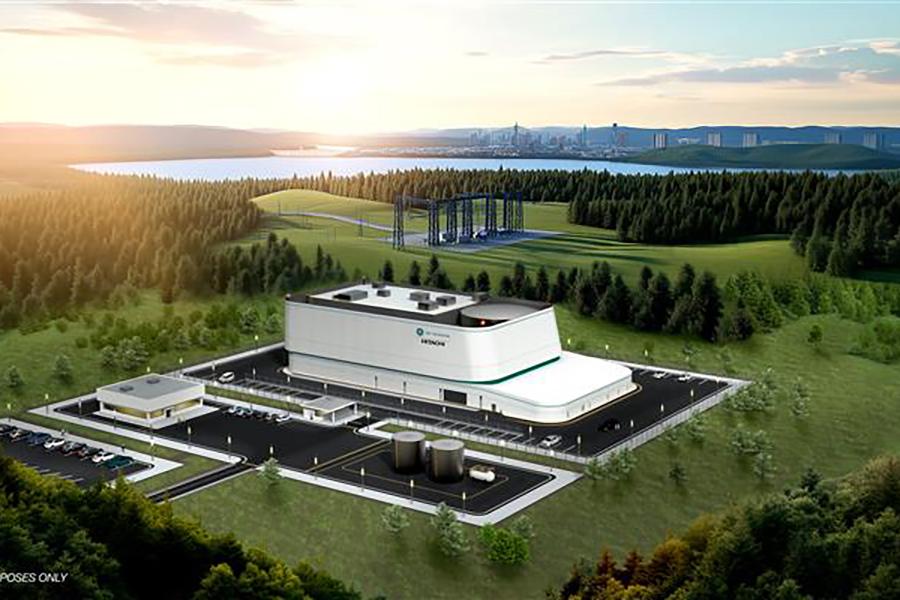
Stephens said he foresees the development of mini-nuclear sites as the answer to powering data centers.

“They are going to want a system that doesn’t use as much water and power,” he said. “Those mini-nuclear plants we have all read about are coming, and that is the only way many of those data centers will work. We just don’t have the power generation to support them. They will need something they can put on their site for that.”
Sparkman said there are two main types of data centers that will impact water needs: closed-loop cooling systems where water is recirculated without evaporation, and open-loop systems that rely on water evaporation in cooling towers, often consuming hundreds of thousands of gallons of water. Smaller-scale data centers tend to run on the closed-loop system while larger ones tend to use open-loop.
While Sparkman said many companies that have approached American Water nationwide said their data centers will use between 3-5 million gallons of water a day, Sparkman said the few that have been approved actually use somewhere between 20,000 and 1 million a day.
“One of the things we are seeing is that many data centers are asking for more gallons than they need, but regardless, we want to be cognizant of our existing rate payers whenever we are making these kinds of decisions,” Sparkman said. “We have to look at source water and how much capacity we have. We have a fair amount of capacity in Chattanooga, but that isn’t true for all utilities. We also want to make sure that if infrastructure is costing the utility, the appropriate people are paying for that infrastructure.”
Another factor Sparkman said to consider is the possiblity that data centers are another “fad” that will leave utilities in the lurch if they build out their infrastructure to accommodate them.
“The other risk I see is how long that data center will be a good customer,” he said. “If you are anticipating getting your money back on volume-basis sales over the course of time, what if the technology changes? What if they don’t need that amount of water? What if you built that infrastructure, and you lose your good water customers.”
ASSET MANAGEMENT
As a lot of Tennessee’s electricity is generated through water usage and water systems are major electricity consumers, Sparkman said the two utilities are deeply connected. As a result, he said both are working to increase their efficiency as more demand is placed on their systems. One way of doing that is through proper management of assets.

"We usually do a pretty good job of knowing where our assets are,” Sparkman said. “What we don’t always have an understanding of is the status of those assets, the criticality of those assets, how those assets are being maintained, and what kind of preventative maintenance is being done on those assets. I’ve worked with small utilities where the person who knows that information is the public works director or director of engineering who keeps it in their head.”
Sparkman said a good asset management plan should include:
- Current state of assets with both an inventory and condition assessment
- Level of service
- List of critical assets
- Capital improvement plan, and
- Long-term funding plans and rate evaluations.
One of the primary services SiteLogiq offers is a program that helps track all of a municipality's assets from buildings down to the life cycle of a refrigerator in a community center. Stephens said cities often have a lot more assets to manage than they realize.
“You have a lot of stuff: you have buildings and items everywhere,” he said. “It’s usually the sheer volume that is the surprise. When you get everything laid out, people are shocked to find they have 30,000 different things they are managing because to them it’s just a building; they don’t think about all of the things they have within that building. The question then becomes how you develop your plan moving forward. A lot of people are doing this on spreadsheets. What we are encouraging folks to do is to get all of their assets into one place.
By knowing the age, condition, and how critical a piece of infrastructure is to the overall whole, Stephens said leaders can better budget and plan for when something may fail or needs to be replaced. The program also offers models based on population and demographics to help determine wear and tear on infrastructure as well as information on rebates, potential savings, and other offers on specific equipment.
“Our buildings are changing, and so is the amount of electricity they use,” he said. “Our electronics that we use in a modern building versus the kind we were using even 20 years ago have changed. The types of heating and plumbing systems we are using are changing. While a building may stay in the same spot, its function and use may also change day-to-day. A long-term plan for infrastructure has to be flexible. It can help to use technology to create more efficiency for the infrastructure you need.”
Before building a new plant and looking into optimizing its efficiency, Stephens said collecting, organizing, and prioritizing data is essential.
“You have to go rooftop to the parking lot because there are so many things happening in every building in every community,” Stephans said. “You have to look at roofs, plumbing systems, HVAC, and lighting. A lot of communities have a lot more needs than they can budget for. All these systems have a certain life cycle, and at some point, you either have to go in and replace or improve those to make them more energy efficient.”
Sparkman said by implementing these plans, utilities can optimize reliable performance in the short-term, anticipate regulatory needs on the horizon, and maximize future investments.
“Ultimately, what it can do is increase the life cycle of those assets and the quality of service of those assets by more efficient use,” he said. “These plans can also give you a baseline to make decisions in a more meticulous way.”
REGIONALIZATION
Water utilities across the country are very fragmented. There are approximately 5,000 water utilities nationwide, compared to 3,000 electric utilities and 1,300 gas utilities. Sparkman said he is hearing more chatter about regionalization of water services by both TDEC and the Comptroller’s Office as a means to provide better water services, particularly in areas whose populations are shrinking.

“Having a bigger entity that can do more things and manage more assets is particularly important as our workforce ages,” he said. “Having a bigger customer base also means if you need to do a big project, you have more people to spread that cost out over. A smaller utility district that needs a large project may not be able to spread that cost out, so it creates a larger impact to ratepayers.”
New regulations are another challenge regionalization can help tackle.
“In a lot of our location areas, emerging contaminants like PFAFS and lead service lines have to be navigated. One of our success stories is when the town of Whitwell decided to merge with us, and we combined that system in early 2013. We have been making improvements to their water treatment plant that has made the water quality better and more reliable. We’ve also been able to put in a new pump station.”
Sparkman said that most West Tennessee communities obtain their water from groundwater sources while that switches to surface water sources in Middle and East, which is largely impacted by rainfall. While all water systems have unique challenges and many of the systems are set up differently, Sparkman said balancing growth and maintaining infrastructure is a universal concern.
“We have areas where population growth is expected to double in the next 50 years and others that are projected to decrease about 40% in that same period,” he said. “The needs of an area that is growing rapidly are very different than those that are not. Whether the population is growing or shrinking, there is still aging infrastructure and a need to reinvest. For some, the issue will be financing that despite a shrinking customer base.”
Smart growth management will also become more essential in the future.
“The question has to be how far is our municipality planning to grow,” Sparkman said. “If I know where the edge is, I can start playing with population density and understand what we are trying to grow when we are doing master planning. If you’re building a water treatment plant, that is supposed to last for the next 30 to 50 years. Building things that are scalable is beneficial for everybody.”