
First Session of 114th Tennessee General Assembly adjourns, passes $59.8 budget
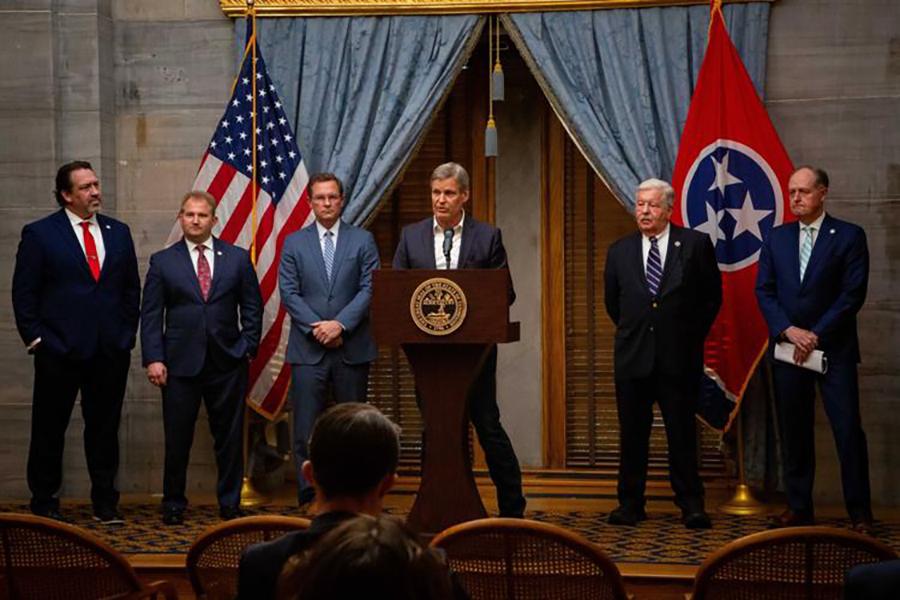
On Tuesday, April 22, lawmakers completed their business and adjourned the first half of the 114th General Assembly.
Highlights of the session included passing a $59.8 billion dollar balanced budget, funding for disaster relief, immigration reforms, and new transportation funding.
When the 114th General Assembly convened in January, a notable change was made to House policies and practices. In the name of a streamlined process and improved efficiency, the House reduced the total number of bills an individual member can file yearly from 15 to 12 in 2025 and 10 bills per member in 2026.
The Session began in earnest immediately following the conclusion of the third Extraordinary Session (Special Session) called by Gov. Bill Lee, which addressed the Education Freedom Act, immigration, disaster relief, and transportation.
Following the conclusion of the productive Special Session, the General Assembly quickly went to work to approve a final budget and adopt other legislative priorities. Lawmakers focused its attention on several areas outside of the confines of the budget and Special Session.
The General Assembly considered several additional bills related to immigration and conducted a comprehensive rewrite of laws governing the sale of hemp, cannabis-based products, and cannabinoids. Legislators also redirected the sales tax on new and used tires to the state's Highway fund to help address urgently needed highway, street, and bridge projects.
A considerable focus was placed on public safety and criminal justice reform. Legislators advanced measures to hold offenders accountable, protect victims, and confront emerging threats.
Key legislation included establishing a domestic violence offender registry (Savanna's Law), advancing Marsy's Law to expand victim rights, and creating new offenses related to human trafficking and smuggling.
Additional bills addressed growing concerns around hate crimes, drive-by shootings, and deepfake technology misuse, notably through the Preventing Deepfake Images Act.
Health and family welfare remained high on the legislature’s agenda. Several measures were enacted to protect vulnerable populations, particularly children, and to improve access to essential services. These included bans on food dyes in schools, expanded prenatal screening, and protections for cancer patients and users of public health services.
Legislators also strengthened protections for children and families by criminalizing AI-generated child exploitation materials, enhancing penalties for child abuse, strengthening penalties for exposing children to fentanyl, and increasing access to childcare and adoption services. The General Assembly also adopted new safeguards for mothers facing pregnancy complications and expanded safe haven laws and foster care protections.
Once again, the legislature contemplated closing political primaries but opted against it. However, legislation was adopted establishing primaries as the way party nominees are selected unless a local party has historically made such selections through a caucus process.
The General Assembly also prioritized the elimination of programs and practices related to diversity, equity, and inclusion (DEI), adopting bills to end race-based selection for membership on state boards and eliminating programs and departments in state and local government and higher education promoting DEI.
FY 2025–26 Adopted Budget Highlights:Major Investments Maintained:
Expanding School Choice:
Disaster Relief for Hurricane Helene:
Rural Hospital and Healthcare Support:
Grant Pool for Critical Community Services
|

Additional legislation prohibits colleges and universities from using race or national origin in determining admission or awarding of scholarships. It also prohibits local government and public universities from basing hiring decisions on DEI goals.
Finally, two constitutional amendments received final approval to advance to the 2026 ballot: one banning a state property tax and another related to bail reform, setting the stage for significant policy decisions by Tennessee voters in the near future.
Governor's Budget Proposal for Fiscal Year 2025-2026
Gov. Bill Lee's proposed FY 2025–2026 budget totaled $59.5 billion, reflecting a nearly 2% decrease from the previous year's budget, yet included a significant 10% increase in state funding.
The proposal dedicated $1 billion in new recurring spending, prioritizing TennCare cost increases, K-12 education (including teacher pay raises), and state employee compensation. Additionally, $2.4 billion in nonrecurring expenditures targeted major infrastructure and public safety projects, including a $1 billion General Fund transfer to the Highway Fund, and substantial capital investments.
The governor's proposed budget for FY2026 included about $1.0 billion in new recurring spending, including:
- $281 million to fund inflationary cost increases, a routine change in the federal match rate, and other activities related to TennCare, the state's Medicaid program.
- $207 million for public K-12 education, which includes funding for teacher pay increases, growth in the state's school funding formula, and other public-school initiatives.
- $191 million for personnel-related costs for state employee salary and health insurance increases.
The governor's proposed budget also included $2.4 billion in nonrecurring funds, including:
- $1.0 billion General Fund transfer to the Highway Fund for transportation projects.
- $221 million for activities and projects related to public safety.
- $206 million for Capital Outlay and other smaller capital projects and maintenance within agency budgets.
Adopted Budget
The General Assembly adopted a final $59.8 billion budget on April 16, 2025, incorporating the governor's core priorities while making notable adjustments. Lawmakers cut approximately $179 million from proposed expenditures—such as eliminating funding for a starter home revolving fund and reducing allocations for various projects—to reallocate funds toward disaster relief, healthcare, and community support.
Key additions included $78 million for TennCare to aid rural hospitals, $20 million in grants for volunteer fire departments, and $20 million in additional relief for Hurricane Helene recovery. The legislature also maintained the governor's priority investments, such as $1 billion for transportation infrastructure, over $440 million in education support (including teacher bonuses and facility funding), and $145.9 million for the newly established Education Freedom Scholarship program.
The budget also bolstered the state's Rainy-Day Fund to a historic $2.2 billion, reinforcing Tennessee's financial stability while advancing public services, healthcare access, and educational choice.
The final budget includes funding for a new office within the University of Tennessee’s Institute for Public Service (UT-IPS) to assist local governments with planning needs—a priority initiative championed by TML and supported through collaborative discussions with Agriculture Commissioner Charlie Hatcher and other stakeholders.
This office will provide technical assistance, training, and service coordination—especially benefiting small and rural communities—and builds on UT-IPS’s established expertise through MTAS and CTAS in delivering statewide support to local governments.