
Newport receives Municipal League award for Excellence in Parks and Recreation

In the wake of Hurricane Helene, the city of Newport was faced with numerous challenges to repair the damage, restore infrastructure for citizens, and conserve the natural environment locals and visitors enjoy.

As part of the recovery process, the Newport Parks and Recreation Department engaged with the Tennessee Department of Agriculture Division of Forestry on a streambank restoration project that strengthened bonds within city government and is now a model for conservation, education, and community resilience.
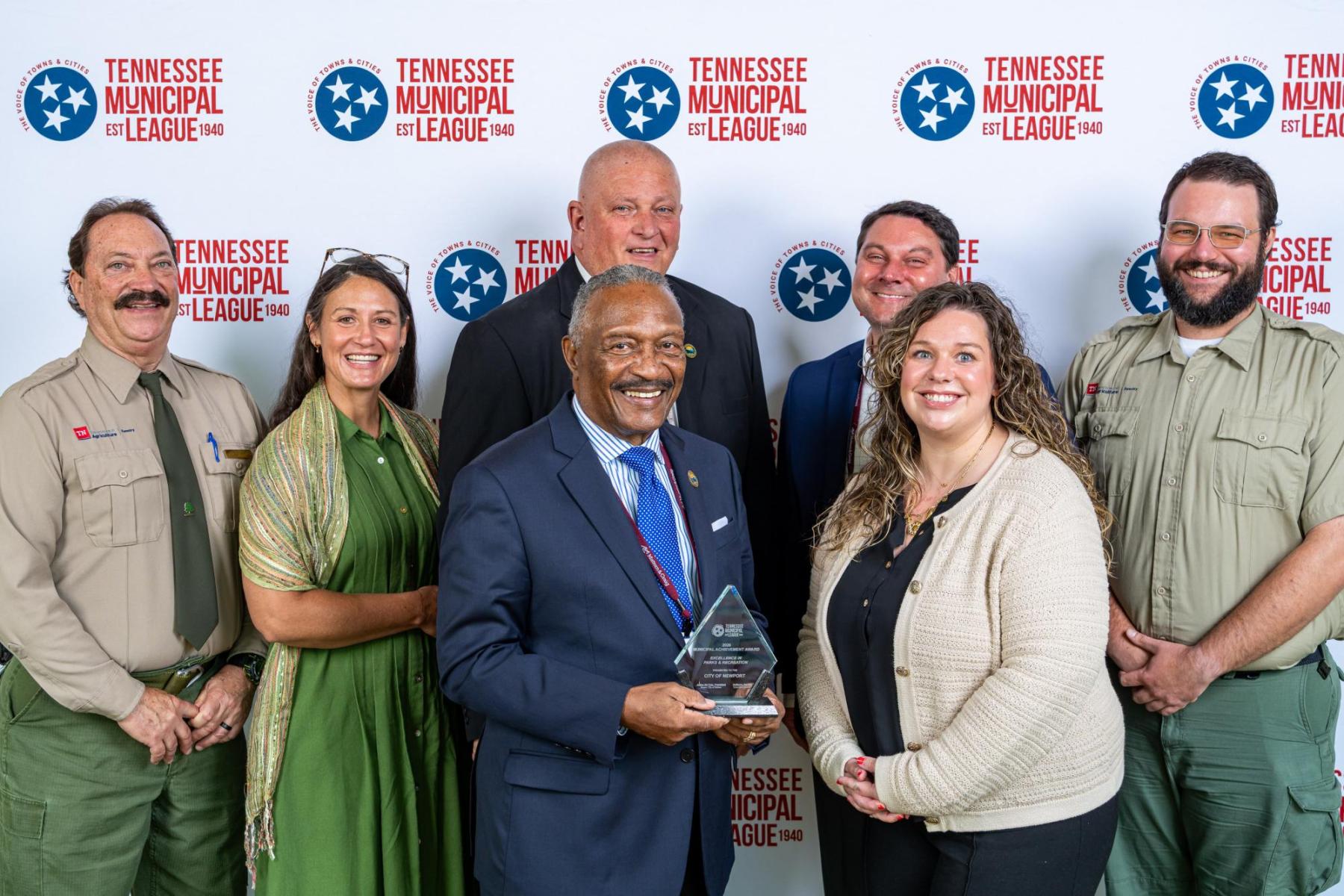
For their commitment to environmental restoration and conservation while also improving recreation opportunities for residents, the Tennessee Municipal League (TML) is pleased to honor Newport for Excellence in Parks and Recreation.
Both Newport’s flagship Newport City Park and the Newport Riverwalk are located alongside the Pigeon River, which bisects the city. In the wake of Helene, the river overflowed its banks, flooding the area. When the waters receded, there were notable changes to the streambanks that put properties along the river – including the park – at further risk.
By partnering with the Division of Forestry to restore the streambank, Newport was able to leverage specialized expertise, technical guidance, and resources that may not have otherwise been as accessible locally. With no need to engage third-party consultants on the work, Newport was also able to save time and money on the project while maintaining high standards for environmental restoration and sustainability.
The Newport Parks and Recreation Department looked within the ranks of the city’s other departments to provide labor and know-how, streamlining implementation of the project, reducing duplication of work, and ensuring that restoration strategies were effective for everyone involved. This also led to new camaraderie among employees from different departments.

The project focused not only on stabilizing the banks of the Pigeon River but also on addressing underlying environmental concerns. Beyond visual improvements, it aimed to enhance water quality, restore natural areas, and make recreation spaces safer, more accessible, and more resilient for residents and visitors.
The project will also save the city money in the long run, implementing erosion control and restoration strategies proactively instead of waiting for another disaster. The project reduces future maintenance costs, prevents further land loss, and avoids expensive repairs using native vegetation and sustainable practices.
A small community designated as economically at-risk, Newport has shown that bringing together the right people, leveraging resources, and prioritizing collaboration, fiscal responsibility, and community well-being can set communities up for success. Although Newport leaders were strained by the toll the recovery, they discovered stepping out of their comfort zone, trusting in state partners, and believing in the future and resilience of their community enabled them to achieve goals that once seemed beyond reach.
The restoration project has reshaped the way Newport thinks about collaboration, stewardship, and its role providing services to the public. It has renewed the commitment of city employees to face challenges, work together, and deliver success previously thought impossible. The Division of Forestry has also used Newport as a model for what small cities can accomplish, even in the face of unprecedented tragedy.