

Knoxville named most accessible, affordable city for disability community
By KATE COIL
TT&C Assistant Editor
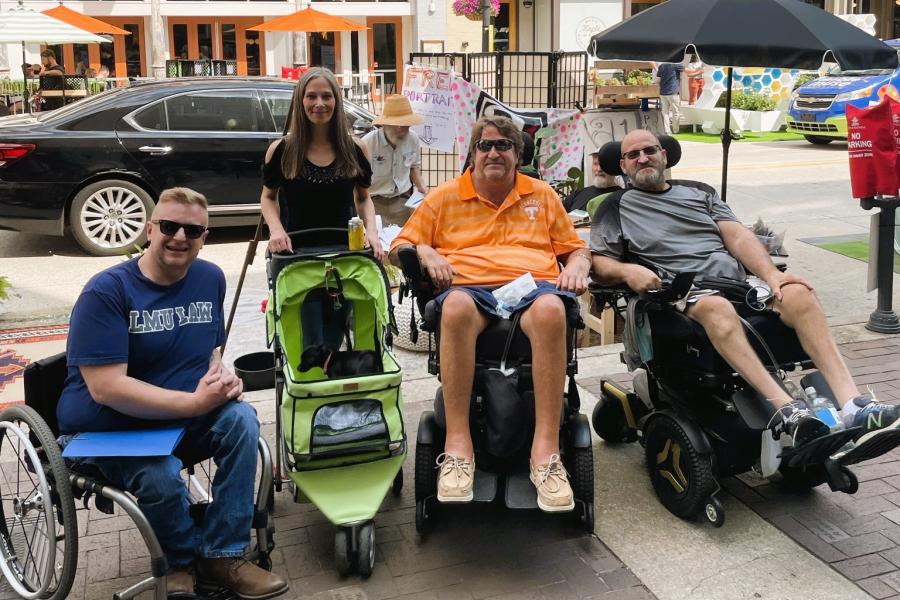
As officials reflect on 35 years since the passage of the Americans with Disabilities Act (ADA), the city of Knoxville was recently named the nation's most accessible and affordable community for those with disabilities.

Knoxville earned the top spot in Trajector Medical’s 2025 rankings. Trajcetor is a leading provider of medical evidence services for people with disabilities.
Misha Dziubak is a certified ADA coordinator, works in Knoxville’s Disability Services Office, and serves as a liaison with the Mayor's Council on Disability Issues (CODI). She said officials in Knoxville are honored to have earned that distinction, but there is more work to be done.
“While we know there is always additional progress to be made, the progress we have made has already been noticed,” Dziubak said. “We are of course, very proud of this, but that does not mean our work stops or slows down. Accessibility and affordability are top priorities for our Knoxville community and have been at the forefront of planning by city officials and the Disability Services Office for many years.”
BUILDING ENGAGEMENT
Connection and outreach are essential to building an accessible community.
“Community engagement is always of utmost importance,” Dziubak said. “When announcing meetings, you have to give information on how to request available accommodations and specifically ask for feedback from the disability community. This will go a long way in making sure that what is most important to your community members is brought to the forefront. Generally, it is better to have a large group of people give feedback rather than a few people because they see things from different aspects and may think differently about issues or solutions than others at the table. It is especially important to involve people with disabilities in all public decision-making processes because of this. A saying in the disability community is 'nothing about us without us,’ and being able to self-represent just makes sense.”

Knoxville created CODI six years before the ADA was signed in 1990 and has since utilized the advisory board to provide information and feedback on programs, events, and concerns in the disability community. This committee works closely with local organizations like the DisAbility Resource Center and AARP Age Friendly Communities Network. Both Dziubak and Knoxville ADA Coordinator Stephanie Cook also serve on the board of the Knoxville Area Employment Consortium, which helps identify resources, programming, employment training, and employment opportunities for individuals with disabilities.
Knoxville’s Office of Disability Services also connects with the community through events like Disability Mentoring Day each October.
"It encourages local youth with disabilities to join us at the city for a day,” she said. “Each is assigned a city mentor, and they learn about the various departments and their functions within the city. We also, of course, provide accommodations for current and prospective employees when needed. Plus, we regularly host interns from other programs within the city and the FUTURES program at the University of Tennessee, and we participate in various transition fair events.”
Additionally, Knoxville’s Human Resources partners with organizations like the American Job Center, Vocational Rehabilitation, McNabb Center teams, Community Action Committee Knox Pride, Centro Hispano, Emerald Youth, Knoxville Leadership Foundation, and others to host and promote local job fairs. Dziubak said some of these events are specifically designed for certain communities, such as seniors or disabled veterans.
MEETING NEEDS
Providing infrastructure is one major role cities play in accessibility.
"Pedestrian travel paths in good repair help people access public transportation or use the sidewalk to go down the street to get food or medicine,” she said. “Making sure to have curb cuts, connectivity, audible signals – these are all important for safety and easier travel.”

To achieve this, Dziubak said city departments must work together. Recently, Knoxville’s Engineering Department partnered with the Disability Office to replace 19,511 linear feet of sidewalk and 484 curb ramps or cuts around the city, focusing on areas near community centers and along primary transit routes.
Some of the infrastructure improvements the city makes are not always obvious to able-bodied citizens but are absolutely vital for other members of the community.
“Tactile wayfinding often goes unnoticed by those who don’t need to use it but is integral to a pedestrian who is blind to navigate without needing to rely on the vision of someone else,” Dziubak said. “Making sure there are detectable barriers when there are head-height protrusions of more than four inches not only helps those using a white cane to avoid walking into it, but it also helps to make sure others walk around the protrusion and stay safe. Door handles that can be operated with no tight grasp or twisting, secure and slip resistant front door mats, continuous handrails, tactile warnings at the tops of stairs, and easy-to-reach features such as soap and hand towels are all designed with accessibility in mind.”

Exercise and recreation can improve outcomes for the disability community, but access to recreational opportunities is often limited. Additionally, the American College of Sports Medicine found 81% of individuals with a disability did not feel welcome in the fitness space, while a University of Texas at Arlington study found only 40% of disabled individuals reported having access to ways to be active. Dziubak said parks and recreation departments can help fill these gaps.
“Creating accessible play spaces for children with disabilities and outdoor areas for adults increases our community’s physical health and provides an opportunity for increased social engagement,” she said. “Our Parks Department now offers adaptive sports, and they have acquired accessible hand bikes for use by those who may not be able to use a traditional pedal bicycle.”
The city also works to ensure accessible and affordable housing is available. Dziubak said the Housing and Neighborhood Development Department has worked on strategies to build and encourage private-sector builders to consider projects aimed at seniors and the disability community.
EMERGENCY SERVICES
In recent years, more attention has been paid to how emergency services interact with the disability community – from residents who are nonverbal to those who may have special needs or considerations during emergencies.

Dziubak said both the city and Knox County ADA offices collaborate with the Knox County Health Department, American Red Cross, and other organizations to draft and implement a Securing Accessibility for Emergencies (SAFE) team emergency response plan addressing evacuation issues.
The ADA office also works with the Knoxville Police Department to train new recruits and answer questions. Additionally, the office provides each officer with a laminated communication card to help with those who are hard of hearing.
“We provide training to all of our police recruits on both the requirements of the ADA along with proper etiquette when interacting with people with disabilities,” Dziubak said. “Each recruit class has at least four hours of interactive training on the ADA and engaging with people with disabilities. During the etiquette training portion, trainers provide an in-person opportunity for recruits to engage with and ask questions specific to a person’s disability, typically a visual, hearing, or mobility disability.”
AGING RESIDENTS
Nearly one in seven Americans live with some type of disability with that number expected to grow as the population ages. Accessibility and affordability can provide the biggest challenges to these Americans, including high housing costs amid low wages, federal regulations limiting income for those on Social Security, and difficulty accessing needs like wheelchair-friendly rentals, accessible buildings, special education teachers, job opportunities, and Medicare services.

To meet growing accessibility needs as citizens age, CODI’s partnership with AARP’s Age-Friendly Communities Network led to the creation of an advisory board to design an action plan for accessibility and aging. Most people cite the ability to “age in place” as a significant concern.
“We tend to gain various disabilities as we age,” Dziubak said. “Because so many develop disabilities later in life, and most people want to stay in their homes as they age, they tend to look for places with affordable housing, a good standard of living, opportunities where social and civic engagement are available, and where buildings, pedestrian paths, and parks also have a high level of accessibility. With Knoxville having so much to offer in regard to these domains, while having entertainment and dining options, beautiful views of mountains and rivers, a rich history, art museums, and a vibrant downtown area, it really does seem like an ideal place to retire.”
BENEFITS FOR ALL
In the 35 years since the passage of the ADA, many of the improvements and changes made in the wake of the act have benefited the wider community.
“Improvements in accessibility often become mainstream,” Dziubak said. “Some examples of this are audio books, text messages, and closed captioning or subtitles. Progress in technology seems to be driven by a perceived need; in these cases, it was better accessibility for people with disabilities. However, once technology is created to fill the specific need, it can take on a life of its own, and as it becomes incorporated into daily life, it is applied to other technology or built upon and expanded into new technology.”

Designing with the ADA in mind provides greater access for everyone.
“Automatic doors benefit those without disabilities who may have their hands full with items, as they can open the door by pressing the button with an elbow,” she said. “Being able to change font size on websites or simply providing a larger font on publications eases eye strain and makes materials easier to read. Detectable warnings at crosswalks can not only alert someone with a visual disability, but also someone who may be bending down to tie their child’s shoe.”
Dziubak said it is also important to remember how ability may change over an individual’s lifetime.
“Becoming a person with a disability is the only minority group a person can join at any time throughout their life, and as we age, we tend to gain limitations in vision, hearing, and mobility,” she said. “When we incorporate increased accessibility into our plans, we help support the needs of all residents, especially as they age.”
Reflecting on the past 35 years, Dziubak said how we view disability access and accommodation changed, along with how everyone engages in the world around them.
"As cities have worked to bring our communities into compliance with the ADA and provide increased access for people with disabilities, we have learned how to do it better, more effectively and efficiently, while adjusting to new technology and requirements,” she said. “Instead of retrofitting accessible options, like everyone needed to do when the ADA was new, we’re able to build in accessibility from the start. Instead of simply coming into compliance with the bare minimum ADA accessibility requirements, more people are taking the spirit of the ADA into account to ensure everyone is accommodated.”