

Watershed project helping cities build local cooperation, knowledge
By KATE COIL
TT&C Assistant Editor
Efforts to repair a Tennessee watershed are also building intergovernmental cooperation, institutional knowledge, and public trust for two East Tennessee municipalities.
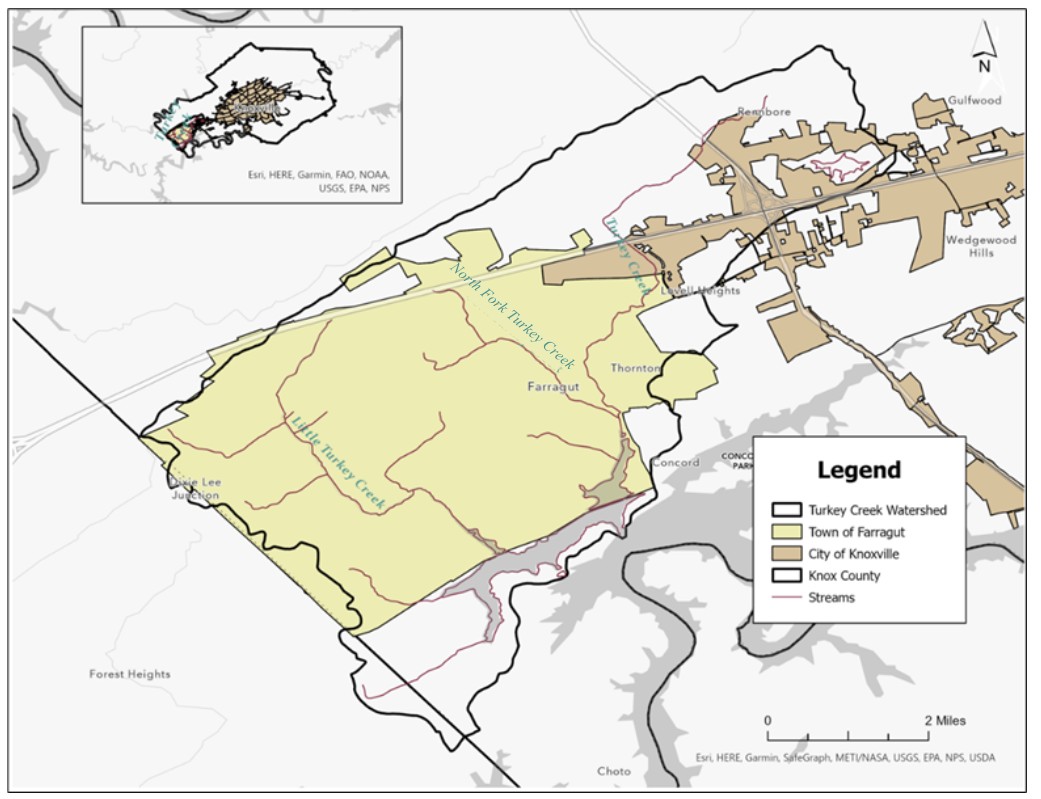
The town of Farragut, city of Knoxville, and Knox County are working collectively with the University of Tennessee, Knoxville, as part of a federal grant awarded through the Tennessee Department of Environment and Conservation (TDEC). Known as a 319 or nonpoint source (NPS) pollution grant, the funds are used to mitigate issues created when surface water picks up pollutants that are then deposited into rivers, lakes, and other watersheds. According to TDEC, 40% of rivers, lakes, and estuaries are not fit for basic uses like fishing and swimming because of NPS pollution.
Cliff Mann, stormwater coordinator with the Farragut Engineering Department, said the watershed touches all three government entities in different ways, but issues with erosion can have a negative impact on everyone.
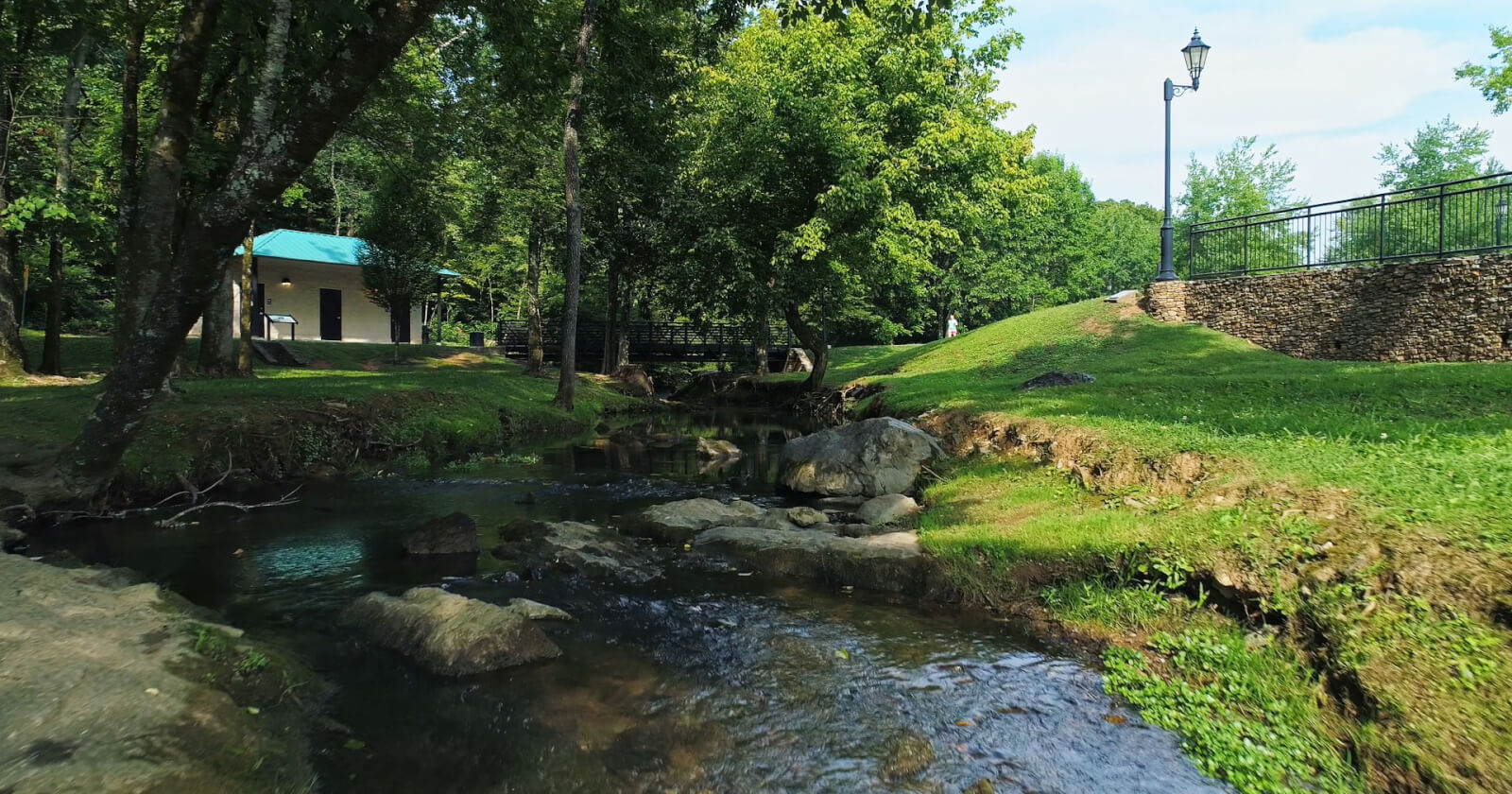
“The streambank restoration is needed when streambanks become more vertical, and they are eroding, which allows sediment into the creek,” he said. “TDEC classifies sediment as the No. 1 pollutant in Tennessee’s waters because the sediment bonds with pollution and carries it off into the water. The town of Farragut is a little over 16 square miles, so we are highly urbanized, and urbanization is also what is causing the degradation of the integrity of our streams.”
Patrick Kontovich, stormwater engineer with the Knoxville Stormwater Division, said what happens upstream in Farragut can impact Knoxville’s part of the watershed.
“The watersheds don’t know political boundaries, so there is an opportunity for someone to do a project in the watershed upstream from the city of Knoxville. That is also great for us,” Kontovich said. “We have some of the bigger watersheds that we spend most of our time in, but there are also some smaller ones on the outskirts. The area surrounding Turkey Creek is mostly a commercial, so for us that means concerns over pollutants like plastics and hydrocarbons from fueling stations. Sediments and bacteria are also concerns statewide. If we can get to that before it becomes more significant, we can stop some of that pollution.”
As part of the project, the three local governments and university officials came together at Farragut’s Founders Park at Campbell Station for a public workshop aimed at preventing further NPS pollution by repairing erosion to the part of the Turkey Creek Watershed that flows through the park.
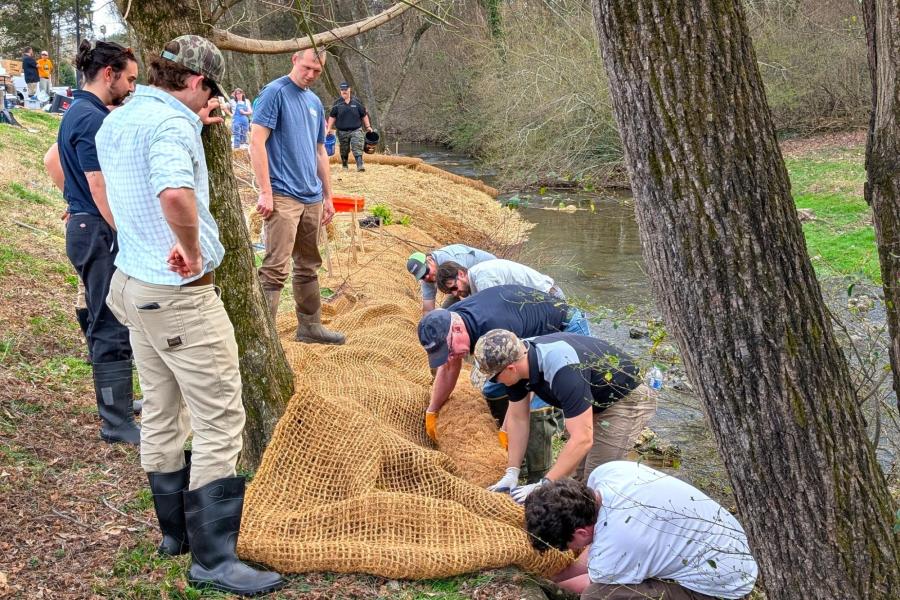
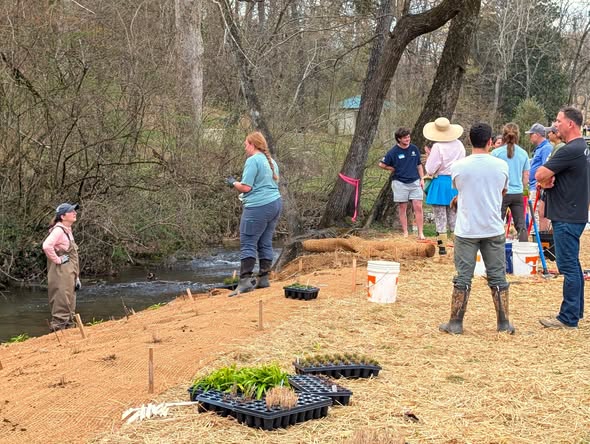
Members of the public were invited to learn more about watershed protection, how their local stormwater authorities are working together, and to get some hands-on experience creating a 270-foot riparian buffer on the park’s creekbank. Officials from TDEC and UT delivered presentations explaining the issues with NPS pollution and how citizens and local governments could replicate the natural buffer in other trouble spots.
The buffer was comprised of a biodegradable material made from packed coconut fibers known as coir logs and a matting put in place to control erosion. Native plants filled the gaps in the matting and will continue to stabilize the bank long after the coir logs have degraded.
“Trees stabilize the creek banks and provide shade, which allows the creek temperature to stay stable,” Mann said. “That allows the surrounding flora and fauna to survive and prevents more algae from growing. The non-native plants have shallow root systems, but they will choke out native plants that have a deeper root structure. By planting those native plants, you can get in that good root structure and stop that erosion. We are hearing a lot about how there are so many microplastics in the water, so we wanted to make sure we were putting down something that wouldn’t add to that problem.”
Mann said projects like these bring together professionals to educate the public about how they can improve their community.
“If we could do something like this every year, it would be great,” he said. “Engineers, developers, landscape architects, and other professionals already know this stuff. But it's so important to get the general public involved and educate them on erosion and what it does to water quality, as well as how we can protect wildlife, like the salamanders we were finding in that creek.”
Kontovich said citizens attending the workshop can then, in turn, support the city’s stormwater department with their new knowledge.
“The people who attend these workshops generally have interest in repairing a stream bank on their property, and they may have some understanding that sediment is bad,” he said. “We give them the knowledge to do some repairs, and we build relationships beneficial to all. We have citizens who serve as volunteers on clean ups, and we get a lot of water quality concerns reported through 311. They are our eyes and ears out there.”
Projects like this can also go a long way to prevent issues like flooding.
“Ultimately, the cleaner the water we can get discharged into creeks, the easier it is to assess that water for drinking,” Mann said. “The more sediment, the longer it takes to get that filtered out. One of the biggest causes of flooding is pinch points where culverts cross roads. If a bunch of debris gets trapped there, it impounds the water, slows it down, and ponds it up. The water gets out of the banks and then you have a flooding issue on the road and the surrounding property.”
In addition to the public-facing project, the grant program has also brought together stormwater officials from all three governments, engineers, developers, landscape architects, and UT’s knowledge base to exchange ideas and learn about the latest tools and techniques in the industry.
“The knowledge UT has on how to repair these streambanks is well beyond the knowledge I have, so I am learning a lot from them,” Kontovich said. “Sharing resources, putting all your knowledge together, and getting that out to the public is important for all of us.”
As someone newer to his position, Mann said the project is also helping him build important connections with other local government and industry professionals that will ultimately benefit Farragut.
“This is only my second year of doing this particular job, so I didn’t have as much of the knowledge that folks at Knox County, the city of Knoxville, or the engineers at UT have,” Mann said. “It was great to put our minds together to come up with a solution to this problem. We all have a share in this because we are all in this watershed. It can also be important for the different stormwater departments to get things consistent with how we do things and get a good working rapport. It’s good to have a network of folks you can ask if you have an issue. They can put some extra eyes on something and maybe see something you haven’t.”
So far, Kontovich said the workshops have proven successful, and he is looking forward to partnering with Farragut, Knox County, and UT on some future workshops.
As the project continues, Mann said they are hoping to identify other areas of the watershed that can be improved.
“As part of the project, an engineering firm is doing digital stream assessments on all 25 miles of stream in Farragut to help identify problem areas. We can then do some smaller projects to stabilize the banks and reintroduce native plants,” Mann said. “We are trying to target areas where we can get the most bang for our buck and spend this grant money the best we can. Sometimes you have to start small, but it can have a big impact.”