

AI capabilities, infrastructure among requests during state budget hearings

By KATE COIL
TT&C Assistant Editor
Investments in AI technology, maintaining state roadways and bridges amid declining revenues, and growing economic development and tourism initiatives were among funding requests presented by state officials at Gov. Bill Lee’s annual budget hearings.
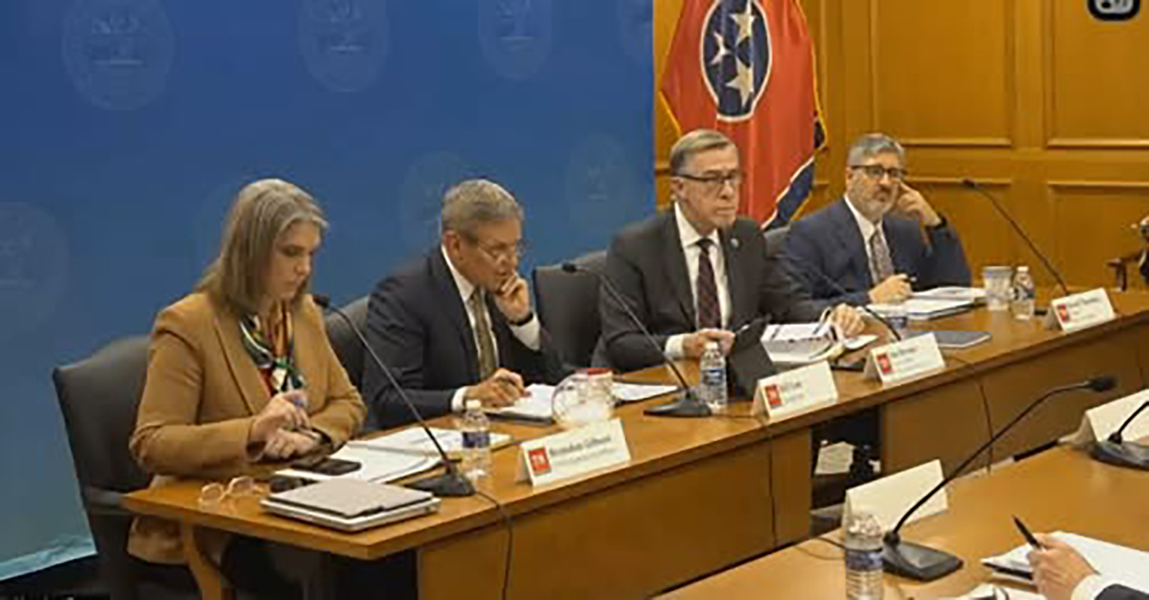
ministration Commissioner Jim Bryson, and State Budget Director David Thurman participate in budget
hearings with various state departments.
Chief Information Officer Kristin Darby requested $50 million to invest in TN.AI, a secure state-administered platform aimed at delivering state services, reducing needs for vendors, and protecting data for Tennesseans through artificial intelligence.
“Artificial intelligence (AI) is rapidly reshaping how organizations operate, and Tennessee has a unique opportunity to lead with purpose and responsibility,” Darby said. “AI will help state agencies work smarter, automating manual processes, improving decision making and delivering faster, more personalized services to Tennesseans. The program funds a statewide AI pilot and innovation fund, giving agencies the ability to test, measure, and scale AI tools with transparency and accountability.”
The state has already established an AI Council and AI enterprise guidance policy to oversee implementation of AI strategy with a focus on innovation, ethics, fairness, and cybersecurity. Some projects are focused on health data portals, unemployment systems, child welfare modernization, and state licensing systems.
Other parts of the investment include training staff to utilize AI both efficiently and securely, and to develop tools and share data across state agencies.
Gov. Bill Lee noted that the previous years’ budget request for this line item had been $10 million and was then reduced to $5 million, but the current request was $50 million. As the AI industry changes rapidly, he asked how the department intended to measure success and manage the emerging field.
Finance and Administration Commissioner Jim Bryson said many vendors are now offering AI add-ons that the state will need to build capacity, as well as the need for the state to build its own infrastructure to move forward. Bryson said this could provide faster, more transparent service to citizens.
Darby said AI is also emphasizing adaptability.
“Often times, we have had very historic and rigid definitions as to what we are going to get,” she said. “There is evolution here, so it is creating a culture of understanding what desired outcomes are. As there is learning, we can build in adaptability to the process. There may be unintended benefits and consequences. Allowing for evolution and adjustment will continue to maximize outcomes that are delivered.”
Darby also noted a $20 million request for transitioning state data and infrastructure to cloud services, excluding certain systems that, for security or other reasons, are best left on premises. If this second phase of moving state data to cloud systems is not completed, it could cost the state $150 million in operations and maintenance.
TRANSPORTATION
Construction costs remain inflated and with more people moving to Tennessee and using the state’s roads, Tennessee Department of Transportation (TDOT) Commissioner Will Reid said the state may need to explore alternative revenue sources to fund necessary transit projects.

Gas tax revenues are flat on state and federal levels. With vehicles becoming more efficient, they are creating the same wear and tear on roadways but generating less gas tax income to cover the costs of repairs. Despite the increase in vehicle registration and a new tire tax, funding is not sustainable to meet roadway needs.
Additionally, federal gas tax revenues the state receives have not increased since 1993, while the state rates were increased in 2017. Half of the TDOT budget is financed through the federal gas tax, but Reid said it may be important to rely less on federal dollars. To make up the difference, Reid said other states rely on toll roads, borrowing money, oil and gas industry revenues, and raising gas taxes to keep up with growth.
Reid reported that several competitive bids are expected for the new Choice Lanes planned for Interstate 24, with that decision expected to be made in the fall of 2026. He said the state is also exploring additional Choice Lane projects in other high-congestion areas across the state. TDOT funding requests included:
- $75 million recurring for maintenance
- $75 million recurring for bridge investment
- $100 million recurring for highway program investment
- $250 million non-recurring for renovating rest areas and visitor centers
ECONOMIC & COMMUNITY DEVELOPMENT
Tennessee Department of Economic and Community Development (TNECD) Commissioner Stuart McWherter said of the 698 projects Tennessee landed in the past fiscal year, 46.6% of those were located in rural counties.
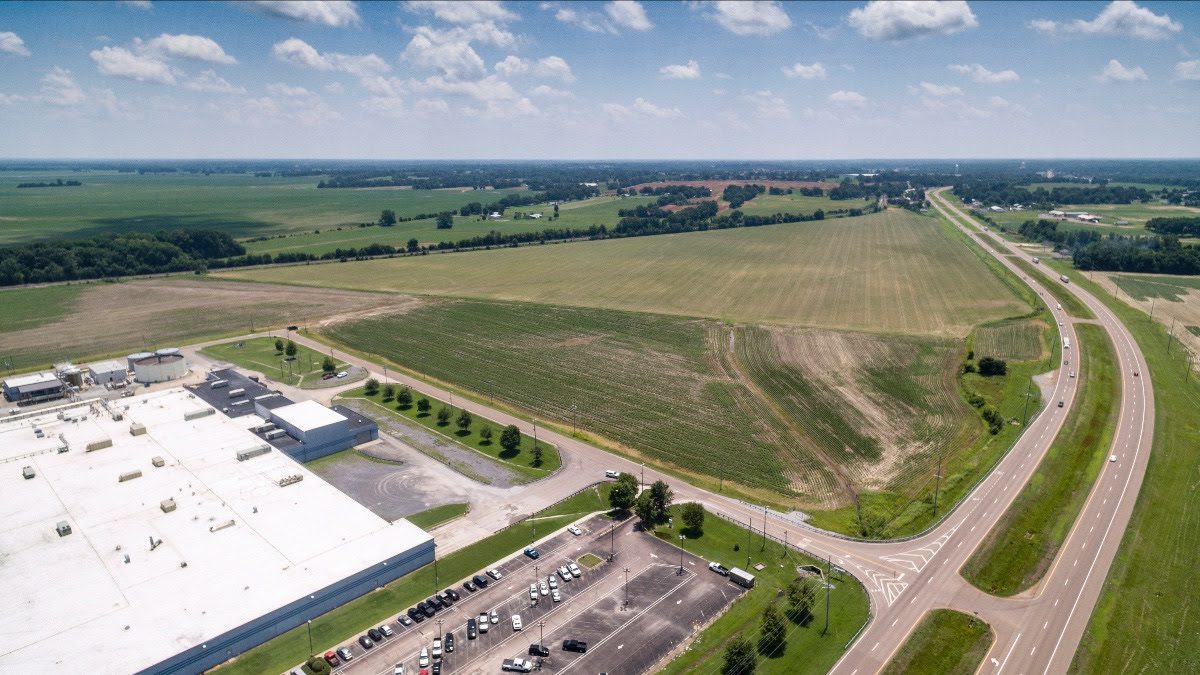
The state has also invested $100 million in site development over the course of the Lee administration, ranging from $100,000 for due diligence studies to $4.5 million for spec building development. TNECD has also invested $809 million into broadband expansion across the state. Requests included:
- $35 million non-recurring funds for innovation, $25 million of which goes to the Nuclear Supply Chain Investment fund and $10 million for the Federal Match Fund program
- $12.5 million recurring and $12.6 million non-recurring funds for Entertainment Commission grants
- $10.22 million recurring and $25 million non-recurring for Rural Development Fund grants
- $2 million non-recurring to expand the AgLaunch Farmer Network
- $1 million non-recurring for marketing
- $10 million non-recurring for historic development projects
- $1.5 million non-recurring for direct international flights
- $538,900 recurring for development districts
ENVIRONMENT
Tennessee Department of Environment and Conserviation (TDEC) Deputy Commissioner Dr. Ronné Adkins noted the Brownfield Redevelopment Area Grant (BRAG) program has invested $13 million in 138 projects in the past year and has become a model for other states.

The demand for participation in the BRAG program currently exceeds what the state is funding. Additionally, the state’s $34 million investment in Strong Infrastructure Funds (SRF) has yielded $170 million in federal funding from the EPA to help with environmental remediation.
Deputy Commissioner Greer Tidwell said the number of fully-funded state parks has gone from 56 to 68 since 2020. Projects expected to open in the coming year include Clinch River Blueway State Park in Hancock County, Cherokee Memorial State Park in Meigs County, and Dry Branch State Park in Lewis, Hickman, and Perry counties. Requests included:
- $34.22 million non-recurring for the State Revolving Fund Program Stabilization
- $1.09 million to match $7.3 million in federal funds for electric grid enhancement
- $700,000 recurring funds as a 50% match to federal funds for the State Energy Program Stabilization fund
- $500,000 recurring funds for the Oil and Gas Program Stabilization and Sustainability funding
- $383,800 recurring and $12,000 non-recurring for staffing at new visitor centers
- More than $1.58 million to fund 14 new positions in the Water Resources Division to meet the growing demand the Subsurface Sewage Disposal System (SSDS) Permits staff are facing, driven by the state’s economic growth and residential development
TOURISM
Tennessee Department of Tourist Development Commissioner Mark Ezell said Tennessee’s tourism infrastructure is boosting visitation to the state at a time when many are seeing travel decline.
Tennessee was the second-fastest growing state for direct visitor spending and had the sixth highest savings in the U.S. from visitor-paid sales tax. The state’s direct-spending tourism growth increased by 36.6%, while the national average only grew by 17.4%. The state saw $31.66 billion in direct visitor spending in 2024-2025.
Tennessee is also the sixth-highest state for under-construction hotel rooms and is one of 17 states with international visitation topping 500,000. There was an 11.5% year-over-year increase in international arrivals to the state.
The two main asks from the department were $10 million recurring for direct marketing organizations and regional grant funding, along with $5 million recurring and $13 million non-recurring for marketing and destination development.
AGRICULTURE
Tennessee Department of Agriculture Commissioner Andy Holt noted $25 million was invested last year in the Farmland Preservation program with development of the program’s rules and a launch expected by late summer 2026.

Partnerships with the UT Institute of Agriculture have yielded two completed projects – one in Tullahoma and a second in Jackson – along with six ongoing and nine projects in construction.
There was an increase in wildland fires the Division of Forestry dealt with over the past year, with approximately 7,000 fires for every 100,000 acres of land and 320 structure losses in 46 counties. Tennessee is one of the top five states for expansion into the forest environment with 86.9% of departments handling fires in these areas consisting of volunteers. Requests from the department included:
- $2 million recurring funds for the Farm to Food Bank program
- $47.25 million non-recurring for the Tennessee Center for Agriculture and Forestry Facility grants
- More than $1.59 million recurring and $892,500 non-recurring for the Wildfire Resiliency Team
- $1 million for State Forest Recreation Management
CRIME & JUSTICE
Tennessee Bureau of Investigation (TBI) Director David Rausch said TBI is continuing to invest in expanding its forensic services and technology and innovation, such as rapid DNA technology and real-time crime centers. Priorities for the coming year include expanding staff and investment in the cold case unit, missing persons unit, and aviation services.

Rausch noted that online crimes against children have increased more than 400% since 2018, with the comptroller agreeing that more staff is needed to better tackle this issue. Additionally, financial abuse of the elderly – particularly through new bitcoin and romance scams – is also on the increase. Budgetary requests from the department included:
- $2.229 million recurring and $3.555 million non-recurring for technology and equipment
- $724,00 recurring and $491,600 non-recurring for the Internet Crimes Against Children division
- $1.317 million recurring and $2.291 million non-recurring for the Rapid DNA Unit
- $3.39 million recurring and $1.888 million non-recurring for the Crime Scenes Response unit
- $497,000 recurring and $33,200 non-recurring for Real Time Crime Center Analysts
EMERGENCY MANAGEMENT
Tennessee Department of Emergency Management and Homeland Security (TEMA) officials noted the Governor’s Response and Recovery Fund has paid out more than $40 million to local governments and businesses for Hurricane Helene relief, accounting for 90% of the allocated funds being awarded. Budget requests from the department included:
- $315,000 non-recurring and $75,000 recurring to expand radio systems used by TEMA and multiple other law enforcement agencies for emergency communications
- $3 million recurring and $315,000 non-recurring funds for a statewide mass notification system that will standardize messaging across local areas as well as allow county EMAs to use the system without paying for individual licensing fees or products
- $227,500 recurring funds for software to help better manage and guide oversight of the National Flood Insurance Program in communities across the state
HEALTH
Officials with the Tennessee Department of Health mentioned that many health departments across the state are seeing costs rise as the number of uninsured Tennesseans seeking their services continues to increase. Budget requests included:
- $27.6 million to expand current training partnerships and programs to improve the Health Smiles Dental Pilot Program in rural and underserved areas
- $11.7 million for health lab testing and services including preparing and responding to disaster events ranging from natural disasters to testing of contaminated waters and forensic testing following the recent explosion in Humphreys County
Full recordings of budget hearings are available online.