

Byrd reflects on IPS career, future of government leadership
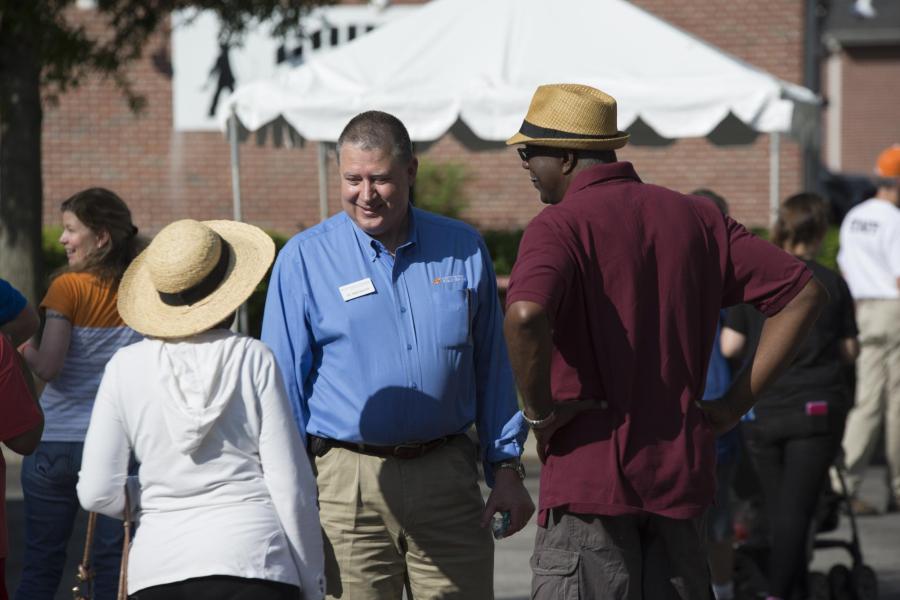
By KATE COIL
TT&C Assistant Editor
Dr. Herb Byrd III retires on Sept. 30 after a decade in his current role as vice president of the University of Tennessee Institute for Public Service (UT-IPS), and a total of 40 years of service to UT.

His UT career began in 1984 as an Extension 4-H agent in Monroe County. He spent seven years in adult agriculture and resource development in McMinn County while serving as county director. In a two-year stint away from extension, Byrd was a vice president with Lads to Leaders, where he conducted workshops teaching adults how to teach leadership skills to youth.
After returning to UT Extension’s state office in 1998, he was responsible for recruitment, personnel and civil rights and served as extension’s affirmative action and EEO officer. In addition, he directed the Extension Evaluation and Staff Development department. He was also the human resources officer for the Institute for Agriculture and served on the staff of the University of Tennessee’s Leadership Institute from 1999-2019.
Byrd is an active member of the Clinton Church of Christ, is board president of Teenage Christian Camp and has worked with medical mission teams in several South and Central American countries with Latin American missions. He serves on the boards of Hillbrook Christian Association, Pathway Lending LLC, Tennessee Center for Performance Management (TNCPE) and is on the advisory panel for the UT System Executive Leadership Institute.
Byrd has been married to his wife, Resa, since 1981. They have three children: Kristin, Heather, and Resa-Marie. He and Resa are working hard to thoroughly spoil their grandchildren. That is reported to be his favorite job yet. He enjoys woodworking, fly fishing, tying flies, building fly rods, and any other outdoor activity.
Tennessee Town & City: How did you transition from your work with agriculture and UT’s Extension office into working with the University of Tennessee’s Leadership Institute and IPS? Are there any lessons from the former that apply to the latter?
Herb Byrd: I came to IPS the last day of August 2014, and there were some particular needs at that time. In thinking about whether to join IPS, my first inclination was “no.” I liked where I was; things were good. But as I thought about it, the things IPS needed were things I knew how to do: building relationships, working on finances, strengthening the budget, and outreach. IPS is an outreach arm of the university, and where I was in ag was in the outreach arm of the university. I even taught classes in outreach, so that part of IPS was very comfortable to me. I knew it upside down and sideways.
The audiences were not completely different. In the Institute of Ag, we worked with local governments a lot, especially county government. Going all the way back to when I was an extension agent, we did a ton of stuff with cities. The local government side of IPS was very comfortable to me, and with the outreach mission, I was right at home.

TT&C: What have been the biggest changes to IPS during your tenure?
HB: One thing I recognized really quickly was we needed a good strategic plan. We had what we called a strategic plan, but it wasn’t very strategic. It didn’t direct any of our work, as far as I could tell. I can say there was some pushback against doing an institute-wide strategic plan, but if someone asks me what one of my favorite days of work was, it was the day we had our strategic planning steering committee working up in Greeneville. You could see the lightbulbs coming on that day of what it was going to do.
That strategic plan has driven a lot of things. We are in one of the strongest financial positions we’ve ever been in because of that strategic plan, the things we put in place, and have worked on over the last 10 years from that plan. We have a ton of new programs, new ways of offering our services, and ways of measuring what we do as a result . We have tons of new internal processes and training, keeping people up to speed, and ensuring people are good teachers because of that strategic plan.
At times, we have been called the best-kept secret of the university, but one of the things in that strategic plan was how we get the word out about IPS, our agencies, and what we do. We literally had a policy of radio silence when I came, and people talked about that. In today’s work, being out of sight and out of mind is not a positive thing. We worked really hard to change that. Marketing and having what you do out there for people to see and understand is so much of a challenge now because there is so much information out there. You have to find a unique way to tell your story in ways people seek out and connect to.
We also have a really great leadership team, so getting the right people in the right spots is so critical to an organization. It is harder to accomplish than you might think, but that has been a great part of our success. We’ve had the highest employee engagement scores in the UT system for several years now. We have a very motivated and engaged workforce. They love what they do and who they do it for. We have a compelling mission that it’s easy to get excited about. There are not a lot of jobs like the jobs we have. You know you can make a positive difference for somebody every day. If you hire the right kind of people who love relationships, helping people, solving problems, and teaching, it’s a self-motivator.
TT&C: What do you think has been the biggest change for how IPS helps local governments provide public services in that same time period?
HB: The demand for what we do has grown substantially. We’ve had a great deal of turnover in local and state government. That creates more urgency and more demand. We live in a world where things are more complicated, and it seems they come at you faster than they used to. The opportunities to provide technical assistance and help has been one of the bigger changes: just the amount of need that is out there. It brings about the challenge, too, of making sure everyone knows we are here to help and serve them. That is a constant challenge because of all of that turnover. You have to keep relationships and build new relationships. It is a challenge getting people interested in public service today, for a number of factors.

TT&C: What would you say has been the biggest challenge of your career and how did you meet that challenge?
HB: We have had a period of tremendous growth. When I came to IPS, we had four agencies, and the Naifeh Center was a part of IPS administration. Today, we have seven agencies plus the SMART Initiative at IPS. We’ve grown in our number of employees. Our budget has grown from $22 million in 2015 to just under $50 million this year.
Growth is great, but part of the challenge is managing the growth in a way that is positive for the organization, so growing pains don’t overwhelm folks. Part of that growth is that we’ve added a lot of new programs, and we’re serving in a lot of ways we haven’t in the past. We don’t always have new people to do that work, so it’s an added workload to folks who are fully employed. You have to figure out how to offer what people need and grow our programs and keep adding. As needs change, the old needs never seem to go away.
I really believe we are strongest when we work together on common issues and problems and collaborate on programming for our clientele. That is a challenge – pulling a lot of talented people together who are used to seeing something wrong and going to do something about it – to get them to stop and think “who do I need to bring with me?”
TT&C: What has been the biggest lesson from your career in public service?
HB: The very first thing is that I have been incredibly blessed to be able to work in a public service role my entire career at the University of Tennessee. I can't even begin to say how fortunate it is for those of us who are able to do that. We know we can make a difference for people every day.
I believe that, in these roles, you have to be a constant learner. Nothing is the same as it was even just a few years ago. One of the challenges is keeping up, but one of the blessings is that, for those who like learning and new things, it makes it easy to get up and go to work. I like building; I build things as a hobby. I would not be the right person to scale down a place or to tear down. That wouldn’t interest me at all.
TT&C: What do you think is the most rewarding thing about your work?
HB: Growing people and meeting people’s needs. I tell people ‘we are in the relationship business.’ Those relationships are key to who we are, what we are, and what we do. Those relationships are what makes it so worthwhile. At IPS, we serve all of Tennessee, but a lot of the time, the people we serve are through other people. It’s great to get to work with local government, law enforcement, business, and industry to touch every part of our state directly or indirectly.
TT&C: What, in your opinion, are the essential qualities of a good leader and a good public servant? Are they the same thing?
HB: I have been a student of leadership for a long time. There are certain traits, qualities, and characteristics that are important regardless of what kind of leadership role it is. At the same, we are in a people business. The traits and qualities that contribute to strong relationships – communication, listening – are some of the key ones for us in public service. We have to be able to listen and really hear what needs and concerns are, what folks are struggling with, then help them find answers that work for them.
There is a challenge when you are in a role where you are considered to be an expert that someone calls to ask a question, you give them an answer, and move on to the next. Rarely does that achieve the long-term result you want to see. There has to be connection, lots of communication, and curiosity to achieve the results we need.

TT&C: What can current government leaders do to better identify and cultivate the next generation of public servants and leaders?
HB: Good leaders create more leaders. One of the sad things in public service today is that our political climate is such that young people – and others – don’t see how they can have a place there or they don’t want to be in that place because it doesn’t look appealing from the outside.
One of the challenges in any public service job is to help people see the need for it as well as what they can contribute if they run for office. Another challenge is educating them about all the jobs where you don’t have to run for office but still work, serve, and make a difference for people. They see all the surface things, the news clips, and get the impression it’s a terrible place to work. That’s not true. It’s a wonderful place to serve, and if you have that kind of mindset or inclination, public service can be an exceptionally rewarding career. We have to do a better job of letting people see those things.
TT&C: What do you think will be the biggest challenges the next generation of local government leaders will face?
HB: In our state in particular, we have grown so fast it is putting pressure on all of our systems from public works to landfills to housing shortages, land use issues, energy and water capacity. In Tennessee, we are so blessed with so many water resources. There was a time in my life where I would see out West how people were struggling with water issues, and I thought we were blessed that would never be a problem we would have.
Now, we are seeing even in Tennessee with the demand and growth we have had, it has taxed our infrastructure. That is going to be a huge challenge for cities and counties across the state moving forward.
In addition, there are some of the bigger social challenges nationwide. In Tennessee, there are certain things like addiction and homelessness that local government needs to have a key role in managing. We continue to struggle with those problems because there isn’t one good answer. Things that tend to work don’t work for long or tend to outgrow the capacity we have. We are also in a climate where people want to reduce taxes, but it takes money to provide services. We are feeling tension where we need to provide more services, and it’s more expensive.
TT&C: What advice do you have to the next generation of local government leaders and public servants?
HB: Public service is a place where you can make a positive difference for somebody every day. When you put your head on your pillow at night and close your eyes, you can see the faces of the folks you made that difference for. Sometimes we do things for people they never know. When you know you’ve improved the quality of life for somebody or you’ve solved a problem they couldn’t, that makes it all worth while.